What Is an Agricultural Solar System?
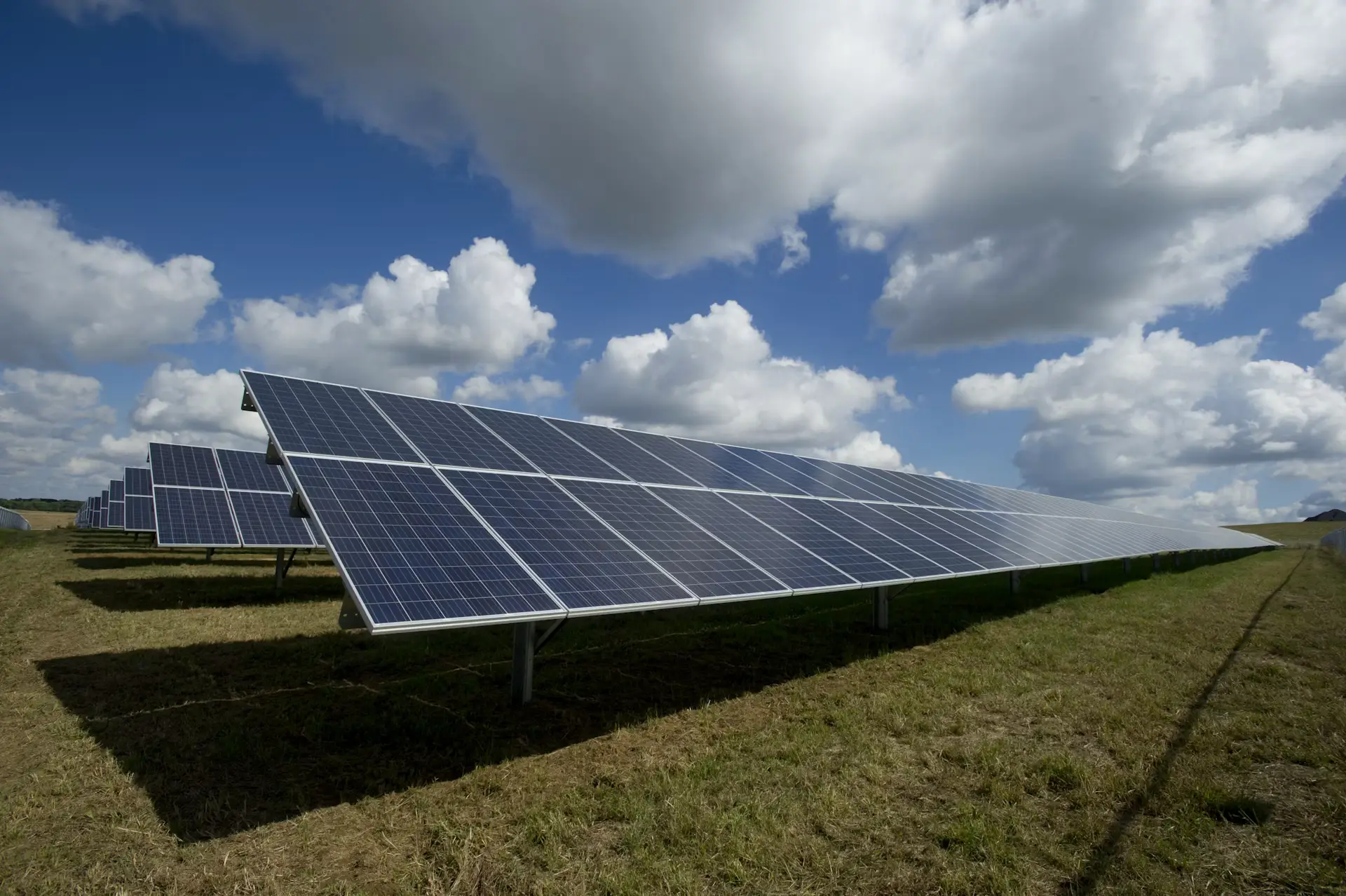
An agricultural solar system uses photovoltaic solar panels to provide electricity for agricultural operations.
Depending on the farm, solar energy can be used for:
-
Tube wells and irrigation pumps
-
Drip and sprinkler irrigation
-
Water-storage pumping
-
Dairy farms
-
Poultry farms
-
Livestock facilities
-
Cold storage
-
Farm offices
-
Lighting and security
-
Ventilation
-
Agricultural processing
-
Motors and machinery
-
Farmhouses
-
Other agricultural electrical loads
The correct system may be:
Direct Solar Pumping
On-Grid Solar
Hybrid Solar
Off-Grid Solar
or a specially engineered combination.
The best solution depends on what the farm actually needs.
Solar Tube Well Systems in Pakistan
One of the most important agricultural applications of solar energy in Pakistan is solar-powered irrigation pumping.
Solar panels generate electricity during the day, and that electricity operates the pump through an appropriate controller, inverter or drive system.
A typical arrangement may be:
Solar Panels → Solar Pump Inverter / Controller → Motor → Pump → Irrigation
Where water storage is incorporated:
Solar Panels → Pump → Water Storage → Irrigation
Solar-powered irrigation is increasingly relevant where farmers want to reduce dependence on diesel fuel, unreliable grid electricity or high pumping-energy costs.
FAO identifies solar-powered irrigation as particularly useful in rural and energy-constrained areas where reliable grid electricity is unavailable.
A Solar Tube Well Should Not Be Sized From Motor HP Alone
A very common approach in agricultural solar is:
“You have a 15 HP motor, so you need this solar package.”
Motor horsepower is important.
But it is not enough information to properly design a solar irrigation system.
A professional assessment should also establish:
-
Required water volume per day
-
Required flow rate
-
Static water level
-
Dynamic water level
-
Bore depth
-
Pump depth
-
Vertical lift
-
Delivery height
-
Pipe diameter
-
Pipe length
-
Pipe friction losses
-
Irrigation pressure
-
Pump efficiency
-
Motor efficiency
-
Existing pump condition
-
Crop irrigation requirement
-
Hours available for pumping
-
Seasonal water requirement
FAO guidance for pump selection specifically identifies water demand, desired flow, source capacity and total pumping head among the essential inputs.
That is why Grid Solar Installation prefers water-and-load-based sizing over simply matching a solar package to the motor nameplate.
What Is Total Dynamic Head?
One of the most important measurements in solar pumping is total dynamic head.
In simple terms, it represents how hard the pump must work to move water from its source to where it is required.
It can include:
Vertical Lift
The height water must be raised.
Water-Level Conditions
The actual pumping water level can be different from the static water level.
Pipe Friction
Water loses pressure while moving through pipes, fittings and valves.
Required Discharge Pressure
Sprinklers, filters and other irrigation equipment may require additional pressure.
Two farms can use pumps with similar horsepower but have very different pumping requirements because their total dynamic head is different.
This is why the bore and irrigation system need to be understood before finalising PV capacity.
Flow Rate Matters as Much as Pump Power
The purpose of an irrigation system is not simply to run a motor.
The purpose is to deliver the required quantity of water.
That means we need to know how much water the farmer needs within the available pumping window.
For example, one farm may need a modest flow continuously for drip irrigation.
Another may require a much larger volume within a shorter irrigation period.
The resulting pump and solar requirements can be very different.
FAO guidance notes that solar irrigation sizing should consider the period when water demand is highest relative to available solar energy—the critical operating period rather than simply the best sunny day of the year.
Solar Pumping During Daylight
One of the simplest agricultural solar configurations is direct daytime pumping.
When sufficient sunlight is available:
Solar Panels → Pump → Water
As solar irradiation increases, available solar power increases.
As solar irradiation falls later in the day, available pumping power may also reduce depending on the equipment and design.
This approach can reduce the need for expensive electrical battery storage.
Where irrigation does not need to happen at exactly the same time as pumping, water can sometimes be pumped during strong solar hours and stored for later use.
Water Storage vs Battery Storage for Irrigation
For many irrigation applications, storing water can be more practical than storing electricity.
Instead of:
Solar → Battery → Pump at Night
a farm may be able to use:
Solar → Pump During Day → Water Tank / Pond / Reservoir → Irrigation When Required
FAO guidance describes water storage as a common and often more economical way of dealing with the mismatch between solar-generation hours and irrigation timing.
This does not mean water storage is always better.
The decision depends on:
But Grid Solar Installation does not automatically recommend batteries for a solar tube well if storing the pumped water solves the actual problem more economically.
Solar Irrigation With Drip Systems
Solar pumping can work particularly well with high-efficiency irrigation systems when correctly designed.
Possible applications include:
The pump must still provide the required flow and pressure for the irrigation network.
A drip system may require consideration of:
A solar installer should therefore understand both:
the electrical system and the hydraulic requirement.
Punjab's current PRIAT agriculture program also promotes solar systems together with high-efficiency irrigation systems, illustrating the growing connection between solar energy and water-efficient agricultural practices.
Solar Irrigation and Groundwater Responsibility
Solar pumping has an important advantage:
Once the system is installed, pumping no longer requires purchasing diesel or grid electricity for every operating hour in the same way.
But this also creates a responsibility.
Lower marginal pumping cost can encourage farmers to pump more groundwater than before.
Recent CGIAR work in Pakistan reports rapid growth of solar-powered pumps and significant groundwater vulnerability in parts of Punjab. Researchers have specifically highlighted correct solar-pump sizing as important because an oversized array can increase both project cost and the risk of unnecessary groundwater abstraction.
FAO similarly recommends that solar-powered irrigation should be combined with responsible water-management planning.
Our position is therefore:
A good agricultural solar system should save energy without encouraging waste of water.
Correct sizing matters for both economics and sustainability.
Solar for Existing Electric Tube Wells
An existing electric tube well can potentially be converted or supplemented with solar generation.
Before designing the system, we need information such as:
If the existing pump is inefficient or incorrectly sized, simply adding solar panels may carry the same hydraulic inefficiency into the new system.
Where necessary, the pump itself should also be evaluated.
Solar for Diesel Tube Wells
Solar can also be evaluated as an alternative to diesel-powered pumping.
This can reduce dependence on:
-
Diesel availability
-
Fuel transportation
-
Engine maintenance
-
Daily fuel expenditure
However, the old diesel engine's horsepower should not automatically determine the solar-system capacity.
Diesel engines and electric motors can have very different efficiencies and operating characteristics.
The solar system should be designed from the required water duty, not simply by copying the diesel-engine rating.
Three-Phase Agricultural Solar Systems
Many agricultural tube wells and larger farm facilities use three-phase motors.
A three-phase agricultural solar installation may involve:
Solar Panels → Three-Phase Solar Pump Drive / Inverter → Three-Phase Motor
or, for a grid-connected farm:
Solar + Grid → Three-Phase Electrical System
Important technical considerations can include:
Grid Solar Installation's 25+ years of electrical installation experience is particularly relevant where solar needs to integrate with large three-phase motors and existing agricultural electrical systems.
Solar VFD and Pump Control
Variable-frequency drive technology can be an important part of agricultural solar pumping.
Depending on the motor and application, a suitable solar pump drive can help manage:
-
Motor starting
-
Changing solar input
-
Motor speed
-
Pump operation
-
Electrical protection
However, simply adding a VFD does not correct an improperly sized pump or irrigation system.
The complete system needs to be matched:
PV Array + Drive + Motor + Pump + Water Requirement
Solar for Dairy Farms
A dairy farm may require electricity for much more than irrigation.
Possible electrical loads can include:
-
Water pumping
-
Milking equipment
-
Milk cooling
-
Ventilation
-
Fans
-
Lighting
-
Water heaters
-
Farm offices
-
Refrigeration
-
Security systems
Some of these loads operate during the day.
Others may be required early in the morning, evening or throughout the night.
This means a dairy-farm solar solution should analyse the full 24-hour load profile.
An on-grid system may suit a grid-connected farm with strong daytime consumption.
A hybrid system may be more appropriate where important nighttime or outage backup is required.
Solar for Poultry Farms
Poultry operations can have electricity requirements that need careful reliability planning.
Loads may include:
Some poultry loads can be operationally critical.
If ventilation or environmental control must continue during an outage, that backup requirement should be engineered separately.
A conventional on-grid solar system should not be assumed to keep critical poultry equipment operating during a grid failure.
A suitable hybrid, battery or generator-backed architecture may be required.
Solar for Livestock Farms
Livestock facilities may use solar for:
-
Drinking-water pumping
-
Bore pumps
-
Lighting
-
Fencing systems
-
Ventilation
-
Feed preparation
-
Farm buildings
-
Security equipment
-
Other productive loads
Remote livestock sites with no practical utility connection may be suitable for off-grid solar.
Where the primary requirement is water, direct solar pumping and water storage may be more economical than installing a large battery system.
Solar for Agricultural Cold Storage
Cold-storage facilities create a different type of solar requirement.
Their loads may include:
-
Compressors
-
Refrigeration equipment
-
Condenser fans
-
Pumps
-
Control systems
-
Lighting
-
Handling equipment
Refrigeration can operate for long hours and may continue after sunset.
This means solar-panel capacity alone does not determine whether the facility has adequate power.
A cold-storage solar design should consider:
For larger agricultural cold-storage or processing facilities, we treat the project more like a commercial or industrial solar installation.
Solar for Farmhouses and Farm Buildings
Agricultural properties may also require electricity for:
-
Farmhouses
-
Worker accommodation
-
Offices
-
Security lighting
-
CCTV
-
Internet
-
Fans
-
Air conditioners
-
Refrigerators
-
Small machinery
Where both irrigation and building electricity are required, the design should determine whether one integrated system or separate systems make more sense.
We do not automatically combine every agricultural load into one inverter.
On-Grid Agricultural Solar
An on-grid system may suit a farm with a usable grid connection and substantial daytime electricity consumption.
During solar hours:
Solar → Farm Load
If solar is insufficient:
Solar + Grid → Farm Load
Where approved surplus generation exists:
Surplus → Grid
This can be relevant for farms operating pumps, processing equipment, refrigeration or other daytime loads.
However, a conventional on-grid inverter generally shuts down during utility failure for grid safety.
Hybrid Agricultural Solar
A hybrid system combines:
Solar + Battery + Grid
It may be appropriate where the farm needs both solar savings and backup for selected electrical loads.
Possible backup loads could include:
-
Farmhouse electricity
-
Security
-
Lighting
-
Controls
-
Selected pumps
-
Poultry ventilation
-
Dairy equipment
-
Refrigeration controls
Battery capacity should be calculated from the actual backup load and required duration.
We do not recommend buying batteries simply because a farm is installing solar.
Off-Grid Agricultural Solar
Off-grid solar may be useful where grid electricity is:
-
Unavailable
-
Impractical to extend
-
Extremely unreliable
A true off-grid farm system may combine:
Off-grid systems require careful autonomy planning because the utility grid cannot automatically make up an energy shortage.
Agricultural Solar Under Pakistan's 2026 Grid Rules
Agricultural consumers are specifically included in Pakistan's current NEPRA Prosumer Regulations 2026.
Under the framework, an applicant can include a three-phase 400 V or 11 kV agricultural consumer, and qualifying distributed generation is defined up to 1 MW.
For grid-connected projects under this framework, proposed distributed-generation capacity is also subject to the premises' sanctioned load and other interconnection conditions. Systems of 250 kW or above trigger an additional load-flow-study requirement under the regulations.
These requirements matter mainly where the agricultural solar plant will operate as a grid-connected prosumer.
A direct standalone solar tube-well project may follow a different technical pathway because it is not necessarily designed to export electricity to the grid.
Net Metering / Net Billing for Agricultural Solar in 2026
Traditional net metering should not be treated as the foundation of a new agricultural solar investment in 2026.
The NEPRA Prosumer Regulations introduced a net-billing arrangement. Electricity imported from the distribution licensee is billed at the applicable tariff, while qualifying exported electricity is credited at the national average energy purchase price.
Grid Solar Installation therefore recommends that agricultural projects focus first on:
Direct Solar Use
Use solar energy for pumping and farm loads when it is produced.
Water Storage
Where suitable, store pumped water rather than unnecessarily converting solar electricity into battery storage.
Correct System Sizing
Avoid installing extra panels only because space is available.
Load Shifting
Operate flexible agricultural loads during solar-production hours where practical.
Battery Storage Where Necessary
Use batteries when they solve a genuine backup or nighttime-energy requirement.
Grid Export as Secondary
Where export is approved, treat it as an additional benefit rather than the central justification for the project.
Solar System Size for an Agricultural Tube Well
There is no universal formula such as:
10 HP Pump = X kW Solar
that works correctly for every farm.
A proper calculation considers the complete pumping duty.
For an initial assessment, we normally need:
Pump Information
Motor HP or kW, voltage, current, phase, pump type and existing control method.
Water Information
Static water level, pumping water level, bore depth, daily water requirement and desired flow.
Delivery System
Pipe size, pipe length, elevation, irrigation pressure and storage requirements.
Farm Information
Crop, acreage, irrigation method, required pumping hours and seasonal requirements.
Solar Conditions
Available installation area, shading, orientation and operating season.
Only after this information is understood should final solar capacity be selected.
Why Oversizing an Agricultural Solar Pump Can Be a Mistake
More solar panels do not automatically mean a better irrigation system.
Oversizing can:
-
Increase project cost
-
Produce energy the pump cannot effectively use
-
Encourage unnecessary water pumping
-
Create electrical compatibility issues
-
Reduce financial efficiency
CGIAR's recent Pakistan work specifically highlights the importance of solar-pump sizing: systems that are too large can increase cost and groundwater-extraction risk, while systems that are too small may fail to meet the farmer's requirements.
Correct sizing is not about making the system small.
It is about making it appropriate.
Why Undersizing Is Also a Problem
An undersized system may:
-
Fail to provide required water
-
Operate the pump below useful performance levels
-
Extend irrigation time excessively
-
Fail during critical crop periods
-
Reduce the value of the farmer's investment
The lowest quotation is therefore not necessarily the lowest-cost solution over the life of the system.
The system needs to perform the required agricultural duty.
Solar Panel Mounting on Agricultural Land
Agricultural sites may have more mounting options than urban properties.
Possible configurations include:
The site should be assessed for:
-
Shading
-
Flooding
-
Drainage
-
Soil conditions
-
Animal access
-
Machinery movement
-
Security
-
Cleaning access
-
Cable distance
-
Future farm expansion
Panels should be positioned where they can operate safely without unnecessarily interfering with farming activities.
Agricultural Solar Electrical Safety
Farms can be demanding electrical environments.
Potential issues include:
Depending on the project, appropriate design may require:
Solar pumping combines electricity and water, making professional electrical work especially important.
Protection for Solar Pumps and Motors
A pump motor can represent a significant part of the system investment.
Protection may need to consider conditions such as:
-
Overcurrent
-
Abnormal voltage
-
Dry running
-
Overheating
-
Phase issues
-
Motor overload
-
Water-level conditions
The exact protection depends on the pump, controller and installation.
We do not recommend bypassing manufacturer protection simply to keep a pump running.
Solar Panel Cleaning on Farms
Agricultural environments can be dusty.
Possible sources include:
-
Dry soil
-
Tractor movement
-
Harvest activity
-
Unpaved roads
-
Nearby fields
Solar modules may therefore require periodic cleaning.
However, cleaning frequency should depend on actual soiling and site conditions rather than one universal interval.
Modules should also be cleaned using methods compatible with the manufacturer requirements.
Maintenance of Agricultural Solar Systems
Agricultural solar maintenance may include:
-
Solar-module cleaning
-
Visual cable inspection
-
Mounting checks
-
Inverter or pump-controller checks
-
Electrical-protection checks
-
Earthing inspection
-
Pump-performance review
-
Monitoring of unusual faults
For irrigation systems, changes in water output should not automatically be blamed on the solar panels.
Reduced flow can also result from:
The entire system should be considered.
Agricultural Solar System Price in Pakistan
There is no single reliable price for an agricultural solar system.
A tube-well project can vary significantly according to:
Likewise, a dairy, poultry or cold-storage project requires a completely different electrical assessment.
For this reason, Grid Solar Installation recommends a site-specific agricultural solar assessment instead of selecting a system solely from an advertised kW package.
Questions to Ask Before Buying a Solar Tube-Well System
Before comparing quotations, ask:
Was the system sized from the water requirement or only from motor HP?
What pumping head was assumed?
What water flow is expected?
At what solar conditions?
What pump and motor assumptions were used?
Does the system use an appropriate solar pump drive?
What electrical protection is included?
Can water be stored instead of using batteries?
What happens during cloudy conditions?
What maintenance will the pump and solar equipment require?
A quotation without these answers may not tell you whether the system will actually provide the required irrigation.
Our Agricultural Solar Design Process
Step 1 — Understand the Agricultural Requirement
We first determine what solar needs to accomplish:
-
Irrigation
-
Tube well operation
-
Farm electricity
-
Dairy equipment
-
Poultry equipment
-
Refrigeration
-
Other agricultural loads
Step 2 — Water and Load Assessment
For irrigation, we collect pump, motor, water-level, flow and irrigation information.
For general farm solar, we assess electrical load and operating hours.
Step 3 — Site Survey
We evaluate:
-
Available solar area
-
Pump location
-
Electrical equipment
-
Water source
-
Cable route
-
Mounting location
-
Existing grid connection
-
Existing generator
-
Site constraints
Step 4 — System Design
We determine the appropriate:
Step 5 — Proposal
The customer should understand the proposed system and the assumptions behind its sizing.
Step 6 — Installation
Solar and associated electrical equipment are installed according to the agreed design.
Step 7 — Testing
The system is tested under operating conditions.
For pumping systems, water delivery—not merely inverter power—matters.
Step 8 — Handover
The customer should understand:
-
Normal operation
-
Pump controls
-
Basic fault indicators
-
Cleaning
-
Maintenance requirements
-
System limitations
Why Grid Solar Installation?
Agricultural solar combines two areas where practical experience matters:
solar generation and electrical installation.
Grid Solar Installation brings 10 years of solar installation experience and more than 25 years of electrical installation experience.
Before developing our recent online presence, much of our work came through physical-world professional relationships involving builders, businesses and construction companies.
Our digital presence is new.
Our practical experience is not.
For agricultural solar, our approach is:
Understand the farm requirement first. Select the equipment second.
We do not want to recommend a large solar system if a better pump, smarter irrigation schedule or appropriate water storage can solve the requirement more efficiently.
Our Agricultural Solar Philosophy
A successful farm solar system should achieve four things:
Produce Useful Energy
Solar generation should match a real agricultural requirement.
Deliver the Required Water or Electrical Output
The goal is not merely to generate kWh. The farm needs useful work.
Control Long-Term Operating Cost
Solar should reduce dependence on expensive or unreliable conventional energy where technically and financially appropriate.
Use Water Responsibly
Lower pumping-energy cost should not become an excuse for unnecessary groundwater extraction.
This combination creates a better agricultural solar investment.
Request an Agricultural Solar Assessment
If you are considering solar for a tube well, irrigation system, dairy farm, poultry farm, agricultural facility or other farm application, providing the following information will help us assess the project properly:
-
Farm location
-
Type of agricultural operation
-
Motor HP or kW
-
Single-phase or three-phase
-
Pump type
-
Bore depth
-
Static water level if known
-
Pumping water level if known
-
Required water flow
-
Daily irrigation requirement
-
Irrigation method
-
Acreage
-
Existing diesel or electricity arrangement
-
Electricity bills where applicable
-
Existing generator
-
Available solar-installation area
-
Other electrical loads
-
Required backup
-
Future farm expansion
Grid Solar Installation can then evaluate whether Direct Solar Pumping, On-Grid Solar, Hybrid Solar or Off-Grid Solar is the most appropriate solution.