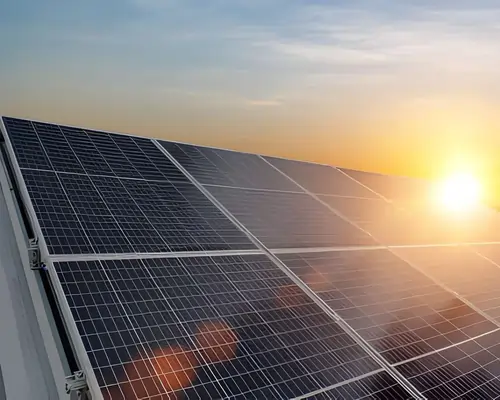
What Is an Office Solar System?
An office solar system uses photovoltaic solar panels to generate electricity for the workplace.
During daylight hours, solar electricity can directly support loads such as:
-
Air conditioners
-
Computers
-
Laptops
-
Monitors
-
Lighting
-
Printers
-
Network equipment
-
Wi-Fi systems
-
CCTV
-
Access-control systems
-
Elevators where technically applicable
-
Kitchen equipment
-
Refrigerators
-
Server and communication equipment
-
Other office electrical loads
Depending on the system architecture, electricity may come from a combination of:
Solar + Grid
or
Solar + Battery + Grid
The correct architecture depends on what the business wants the solar system to accomplish.
Why Offices Can Be Well Suited to Solar Energy
One of the major advantages of office solar is the natural relationship between office working hours and solar-generation hours.
Many offices operate primarily during the day.
Solar panels also produce most of their electricity during daylight.
This creates an opportunity to consume a substantial portion of solar generation directly inside the office.
For example:
Solar Panels → Office Electrical Loads
Rather than purchasing all daytime electricity from the utility, available solar generation can supply part of the demand.
This direct use of generated solar electricity is known as self-consumption.
Under Pakistan's current prosumer framework, self-consumption is particularly important because imported and exported electricity are treated separately under net billing rather than assuming equal-value one-for-one adjustment.
Office Solar and Pakistan's 2026 Net-Billing System
Pakistan introduced the NEPRA Prosumer Regulations, 2026 in February 2026, followed by amendments during the year.
For qualifying new grid-connected prosumer systems, electricity drawn from the distribution company and electricity exported to it are accounted for separately under the current framework.
For an office, this means solar design should not be based only on the idea of:
“Produce as many units as possible and send the rest to the grid.”
A better approach is to study:
The financial value of solar therefore depends heavily on when the office consumes electricity, not merely how many solar panels can fit on the roof.
Because regulations, tariffs and approval requirements can change, the applicable rules should be checked for the specific project and distribution licensee before final system design.
What Type of Offices Can Use Solar?
Office solar systems can be designed for a wide range of workplaces.
Corporate Offices
Corporate buildings often have significant daytime loads from cooling, lighting, computers and business equipment.
IT Companies and Software Houses
IT businesses may have consistent loads from computers, monitors, networking, servers and air conditioning.
Backup requirements can also be particularly important where an internet or power interruption affects productive working time.
Call Centers
Call centers can have large numbers of workstations, continuous internet requirements, communication equipment and extended operating hours.
Their load profile should be studied carefully because some call centers operate beyond normal daylight hours.
Professional Offices
Solar can be considered for:
Banks and Financial Offices
Where permitted by the property's electrical and operational requirements, solar can contribute to normal daytime energy consumption while existing backup requirements are treated separately.
Coworking Spaces
Shared offices may have high occupancy, extensive cooling and a large number of computers throughout the working day.
Educational and Administrative Offices
Administrative buildings with predictable daytime schedules may also have a load profile suited to solar generation.
The correct capacity should always be determined from actual consumption rather than business type alone.
Office Solar System Options
There are three broad solar architectures to consider.
On-Grid Solar System for Offices
An on-grid office solar system operates in parallel with the utility supply.
During the day:
Solar → Office Load
When office demand exceeds solar generation:
Solar + Grid → Office Load
Where grid export is approved and surplus generation is available:
Excess Solar → Grid
On-grid may be suitable when:
-
Bill reduction is the main objective
-
The office has a reliable grid supply
-
Battery backup is not required
-
Most electricity is consumed during daylight hours
-
Existing UPS or generator arrangements already meet backup requirements
A conventional on-grid solar system should not be assumed to power the office during a grid outage.
Hybrid Solar System for Offices
A hybrid office solar system combines:
Solar + Battery Storage + Grid
This configuration may be appropriate when an office wants both:
Depending on the design, battery-backed loads could include:
The battery system should be designed around clearly defined backup requirements.
Should an Office Choose On-Grid or Hybrid Solar?
The answer depends on what interruption means to the business.
Choose On-Grid When:
The main goal is reducing electricity purchased from the utility and existing grid/backup arrangements are acceptable.
Consider Hybrid When:
An outage can interrupt important business operations and battery-backed electricity is required.
For example, if losing internet, computers and communication equipment for one hour stops productive work across an office, backup may have business value beyond electricity savings alone.
However, that does not mean the entire building needs battery backup.
A better design may separate essential loads from non-essential loads.
Essential-Load Design for Office Backup
One of the most important decisions in an office hybrid system is:
What actually needs to remain on during load shedding?
Essential loads may include:
Non-essential or high-demand loads might be excluded from standard battery backup depending on the project.
For example:
This approach can reduce unnecessary battery capacity while maintaining important business functions.
Solar Backup for Office Computers and IT Equipment
Office IT loads deserve careful attention.
A solar installer should understand that energy backup and power continuity are not exactly the same thing.
Solar batteries provide stored energy.
A UPS may also serve specific requirements related to uninterrupted transfer and sensitive equipment.
If an office already uses:
the existing setup should be assessed before integrating solar.
We do not recommend removing existing business-critical backup equipment simply because a hybrid inverter is being installed.
The solar, battery, UPS and generator systems should be coordinated according to the office's actual continuity requirements.
Can Solar Power Office Air Conditioners?
Yes.
Air conditioning is frequently one of the largest daytime electrical loads in an office.
Because AC demand can also be high during sunny daytime hours, it can align well with solar production.
However, correct sizing requires information such as:
Running air conditioners from daytime solar generation is very different from expecting batteries to operate them for several hours during an outage.
If AC backup is required, the battery and inverter requirements can increase substantially.
Solar System for an Office with a Generator
Many commercial offices already use generators during electricity outages.
Solar can potentially form part of that broader electrical system, but generator integration should be assessed properly.
Important considerations may include:
-
Generator capacity
-
Existing ATS arrangement
-
Essential-load panel
-
Generator operating sequence
-
Inverter configuration
-
Protection
-
Reverse-power considerations
-
Battery charging strategy
-
Grid availability
The objective is to avoid creating conflicting power sources or an unreliable operating sequence.
Generator integration should therefore be planned during system design—not added as an afterthought.
Solar System for an Office with an Existing UPS
An existing UPS does not automatically prevent solar installation.
However, we first need to understand:
-
UPS capacity
-
Battery bank
-
Equipment connected to the UPS
-
UPS input source
-
Existing distribution arrangement
-
Required backup duration
-
Whether the existing batteries are still suitable
Depending on the office, the most practical solution may involve:
-
Keeping the existing UPS
-
Reconfiguring certain circuits
-
Installing a hybrid solar system
-
Creating separate essential-load distribution
The correct decision depends on the equipment already installed.
How We Size an Office Solar System
Office solar sizing should be evidence-based.
1. Review Electricity Consumption
Recent electricity bills help establish overall and seasonal consumption.
Several months are more useful than one unusually high or low bill.
2. Determine Working Hours
We identify:
-
Office opening time
-
Closing time
-
Working days
-
Weekend operations
-
Night shifts
This helps estimate how much electricity is used while solar is available.
3. Identify Major Loads
Important office loads might include:
-
Air conditioning
-
Computers
-
Servers
-
Lighting
-
Elevators
-
Pumps
-
Kitchens
-
Printing equipment
4. Measure or Estimate Peak Demand
The inverter and electrical system must be suitable for the intended operating load.
5. Separate Daytime and Nighttime Consumption
This helps determine whether a battery is valuable or whether an on-grid configuration could meet the main objective.
6. Define Backup Requirements
For a hybrid system we determine:
7. Evaluate Available Installation Area
The proposed solar capacity must also fit the site safely and practically.
kW vs kWh for Office Solar
Understanding two measurements helps businesses compare solar proposals.
kW – Power
Kilowatts describe instantaneous electrical power.
For example, an office may be using 25 kW at a particular moment.
kWh – Energy
Kilowatt-hours measure energy used over time.
An office consuming an average of 20 kW for eight hours would use substantially more energy than an office that briefly reaches the same load.
Solar design should consider both power and energy.
Office Rooftop Solar Systems
Many commercial offices have usable rooftop space for solar panels.
Before installation, the roof should be assessed for conditions such as:
-
Usable area
-
Shading
-
Roof condition
-
Structural suitability
-
Water tanks
-
HVAC equipment
-
Existing services
-
Access routes
-
Panel orientation
-
Cable routes
-
Maintenance access
Installing the maximum possible number of panels is not always the best design.
The solar array should be matched to the electrical objective as well as available space.
Solar Carports for Offices
Where appropriate, office parking areas may offer another opportunity for solar installation.
A solar carport can potentially provide:
However, a carport solar project requires appropriate structural, civil and electrical design and should be assessed separately from a normal rooftop installation.
Office Solar System Components
A professionally designed office solar system may include:
Solar Panels
Convert sunlight into DC electricity.
Solar Inverter
Converts and manages solar-generated electricity for use within the building and grid interaction where applicable.
Battery Storage
Included where backup or energy storage is required.
Mounting Structure
Supports the PV modules securely on the available installation surface.
AC and DC Cabling
Carries electrical energy between modules, inverters and building distribution.
Electrical Protection
Appropriate protection should be included for the specific AC, DC and battery architecture.
Earthing
Correct earthing is an important part of electrical safety.
Monitoring
Compatible systems may allow generation and other operating information to be monitored digitally.
Electrical Safety for Office Solar Installations
A commercial solar system becomes part of the building's electrical infrastructure.
Installation should therefore consider more than panels and an inverter.
Important areas can include:
-
Cable sizing
-
AC protection
-
DC protection
-
Earthing
-
Isolation
-
Surge protection
-
Distribution-board integration
-
Inverter location
-
Battery location
-
Protection coordination
-
Safe labelling
-
Existing generator systems
-
Existing UPS systems
-
Grid-interconnection protection
Grid Solar Installation's 25+ years of electrical installation experience is particularly relevant to this part of our solar work.
Solar should be integrated with the building electrical system—not treated as an isolated rooftop product.
What Happens to Office Solar During a Grid Outage?
This depends on the solar architecture.
Conventional On-Grid System
A standard grid-connected inverter generally disconnects from the grid during a utility outage as part of its anti-islanding protection.
Solar panels being in sunlight does not automatically mean the office will continue receiving power.
Hybrid System
A compatible hybrid system can be designed to supply isolated priority loads using battery storage and available solar generation during an outage.
Backup performance depends on:
-
Hybrid inverter capacity
-
Battery power
-
Battery energy capacity
-
State of charge
-
Backup circuit design
-
Connected loads
These limitations should be clearly established before installation.
How Much Battery Does an Office Need?
Battery requirements depend on the load and desired backup time.
A better question than:
“How many batteries do I need for a 20 kW solar system?”
is:
“Which office equipment needs backup, how much power does it require, and for how many hours?”
Battery design should consider:
-
Essential-load kW
-
Desired backup hours
-
Usable battery capacity
-
Battery discharge limits
-
Inverter losses
-
Battery power limits
-
Reserve capacity
A small IT-focused backup requirement can be very different from a requirement to operate the entire office including air conditioners.
Office Solar System Price in Pakistan
There is no single meaningful price for an office solar system because offices have different electrical requirements and installation conditions.
Project cost can depend on:
-
Solar capacity
-
Panel specifications
-
Inverter capacity
-
On-grid or hybrid configuration
-
Battery capacity
-
Mounting structure
-
Roof conditions
-
Cable lengths
-
Electrical protection
-
Distribution-board modifications
-
Monitoring
-
Grid-interconnection scope
-
Existing UPS/generator integration
-
Installation complexity
For this reason, Grid Solar Installation recommends a load-based proposal rather than selecting solar only from a fixed-price package.
How to Compare Office Solar Quotations
Two proposals both labelled “30 kW office solar system” may not include the same technical scope.
Ask each installer:
What is the actual PV capacity?
Panel capacity and inverter capacity are not necessarily identical.
What annual generation is being assumed?
Ask for the assumptions behind the projection.
How much generation is expected to be self-consumed?
This can materially affect financial performance.
Is battery storage included?
If yes, ask for both total and usable capacity.
Which circuits will have backup?
Do not assume whole-office backup.
What electrical protection is included?
This should be clearly specified.
How will my existing UPS or generator be integrated?
This is important for offices with existing backup infrastructure.
Which warranties apply?
Equipment warranties and installer workmanship terms should be stated separately.
What grid-approval work is included?
Where grid export is intended, confirm the applicable scope before signing.
Office Solar Savings and ROI
Solar can reduce the amount of electricity an office purchases from the grid, but responsible ROI calculations should be based on the individual business.
Important variables include:
We do not recommend assuming that every office will save the same percentage or recover its investment in the same number of years.
A credible proposal should show how the estimate was calculated.
Does an Office Need Batteries to Benefit From Solar?
No.
An office with high daytime consumption may use a substantial amount of solar electricity directly without batteries.
Battery storage becomes more relevant when the business also wants:
This is why the solar architecture should be selected after defining the business objective.
Common Office Solar Design Mistakes
Choosing Capacity Only From the Monthly Bill
The bill does not show exactly when electricity is consumed.
Ignoring Air-Conditioning Load
AC can represent a major portion of office demand.
Assuming Solar Automatically Provides Backup
Conventional on-grid solar generally does not.
Backing Up Every Appliance
This can create unnecessary battery cost.
Ignoring Existing UPS and Generator Systems
These should be considered during electrical design.
Oversizing Solely for Grid Export
Under the current net-billing environment, direct self-consumption should be evaluated carefully.
Comparing Quotations Only by Price Per kW
Electrical scope, protection, equipment, system design and assumptions can differ considerably.
Our Office Solar Installation Process
Step 1 – Business Requirement Discussion
We establish whether your primary objective is:
-
Electricity-cost reduction
-
Backup
-
Business continuity
-
Increased solar self-consumption
-
A combination of these goals
Step 2 – Energy Review
We review available electricity bills and office operating information.
Step 3 – Load Assessment
We identify major loads and how they operate throughout the day.
Step 4 – Site Survey
We assess the roof or other installation area and relevant electrical infrastructure.
Step 5 – System Design
We determine an appropriate on-grid or hybrid architecture based on the agreed requirements.
Step 6 – Proposal
The proposed capacity, equipment and installation scope should be clearly defined.
Step 7 – Installation
The solar and electrical equipment is installed according to the agreed design.
Step 8 – Testing and Commissioning
The system is tested before handover, including applicable backup functions.
Step 9 – Handover
The customer should understand:
Why Grid Solar Installation?
Our website and digital footprint are relatively new.
Our practical experience is not.
Grid Solar Installation brings 10 years of solar installation experience and more than 25 years of electrical installation experience.
Before establishing our current online presence, much of our work developed through professional networks involving builders, businesses and construction companies.
We believe commercial customers should choose a solar solution based on engineering, electrical safety and realistic energy analysis—not only marketing claims.
Our objective is to understand:
your office load + working hours + electrical infrastructure + backup requirement
before recommending system capacity.
As we complete and document new digital-era projects, we intend to strengthen this page with genuine office-project photographs, measured system information, case studies and customer feedback.
Request an Office Solar Assessment
If you are considering solar for an office, corporate building, IT company or other workplace, the following information will help us prepare a more meaningful assessment:
-
Office location
-
Recent electricity bills
-
Working hours
-
Number of working days
-
Number and capacity of air conditioners
-
Number of computers/workstations
-
Server or IT infrastructure
-
Existing UPS
-
Existing generator
-
Required backup loads
-
Required backup duration
-
Available rooftop or parking space
-
Existing solar equipment, if any
-
Planned office expansion
Contact Grid Solar Installation to discuss whether an On-Grid Office Solar System or Hybrid Office Solar System is more suitable for your business.