What Is a Grid-Tie Inverter?
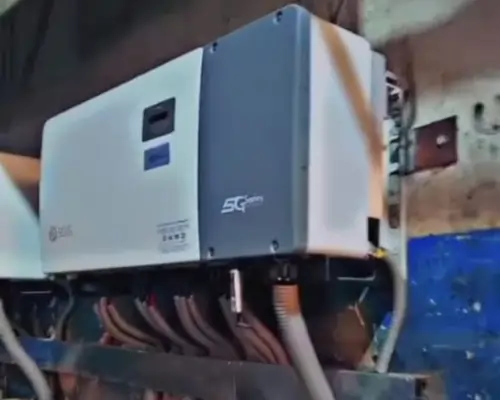
A grid-tie inverter, also called an on-grid inverter or grid-connected solar inverter, converts DC electricity generated by solar panels into AC electricity that can operate in parallel with the utility grid.
The basic energy path is:
Solar Panels → Grid-Tie Inverter → Property Electrical System → Loads / Grid
When solar generation is available, the property can consume solar electricity directly.
If solar production is lower than the property load, the utility grid supplies the remaining requirement.
Where grid export is permitted and properly approved, eligible surplus electricity may flow to the distribution network.
The U.S. Department of Energy describes the inverter as the equipment that converts PV-generated DC electricity into grid-compatible AC and synchronizes its electrical output with the utility network.
What Does a Grid-Tie Inverter Actually Do?
A modern solar inverter performs several important functions simultaneously.
Its primary function is DC-to-AC conversion, but it can also manage maximum-power-point tracking, monitor solar-array conditions, synchronize output with the grid, respond to abnormal voltage or frequency conditions, provide electrical protection functions and report system-performance information where monitoring is supported.
This is why inverter selection affects much more than conversion efficiency.
A technically unsuitable inverter can limit the performance of otherwise good solar panels.
Grid-Tie Inverter Installation Is Not Just an Inverter Replacement
When we assess a grid-tie inverter installation, the first question should not simply be:
“Which brand do you want?”
The more important questions are:
What solar array will be connected to it?
What are the panel electrical characteristics?
How many modules are connected in each string?
What voltage will those strings produce?
How much current will each MPPT receive?
Is the property single-phase or three-phase?
What is the site's sanctioned load?
Is grid export required?
How will the inverter connect to the existing distribution system?
Correct answers to those questions determine whether an inverter is technically suitable.
Grid-Tie Inverter Sizing
An inverter should not automatically have exactly the same nameplate capacity as the total solar-panel capacity.
Solar systems can sometimes be designed with a PV array whose DC capacity differs from the inverter's rated AC output.
This relationship is commonly discussed as the DC-to-AC ratio.
However, there is no universal percentage that should be applied to every inverter.
Proper sizing depends on manufacturer limits, local solar conditions, module characteristics, orientation, expected generation and acceptable clipping.
Manufacturer design guidance specifically warns that the maximum permitted oversizing ratio is not necessarily the optimum design and recommends evaluating expected energy production and clipping before deciding the final ratio.
Grid Solar Installation therefore does not recommend choosing inverter capacity from a generic statement such as:
“Always install 20% more panels than the inverter.”
The correct value should be calculated for the selected equipment and site.
What Is Solar Inverter Clipping?
An inverter has a maximum AC power output.
If the solar array is capable of producing more DC power than the inverter can convert at that moment, the inverter may limit its output.
This is known as clipping.
A small amount of calculated clipping can be part of an intentional system design.
Excessive clipping may indicate that the PV array and inverter have been poorly matched.
The correct question is not whether clipping can ever occur.
It is:
How much expected annual energy is being lost compared with the benefit obtained from the chosen PV-to-inverter ratio?
That requires system modelling rather than guesswork.
Solar String Design Is Critical
Solar panels connected in series form a string.
The electrical voltage produced by that string must remain within the inverter's allowable input conditions.
String design should consider the selected module's:
Open-circuit voltage (Voc)
Operating voltage
Maximum-power current
Short-circuit current
and the inverter's:
Maximum DC voltage
MPPT voltage range
Maximum current per MPPT
Maximum short-circuit current
Number of available MPPTs
Permitted modules per string
An incorrect string configuration can cause poor production, inverter faults or potentially unsafe electrical conditions.
Why Maximum String Voltage Matters
PV-module voltage changes with environmental conditions.
The maximum possible string voltage therefore should not be calculated only from a module's nominal operating voltage on a normal afternoon.
The engineer should confirm that the proposed series string remains within the inverter's maximum DC input voltage under the relevant design conditions.
This is one reason why randomly adding additional panels to an existing string can be a mistake.
Before expanding an existing system, inverter and module specifications should be checked again.
Why MPPT Design Matters
MPPT means Maximum Power Point Tracking.
An inverter uses MPPT control to operate the PV array around electrical conditions that allow useful energy extraction from the available sunlight.
Inverters may have multiple MPPT trackers.
These can be valuable where different groups of panels experience different operating conditions, such as different orientations or roof surfaces.
For example, modules facing one direction should not automatically be mixed onto the same MPPT with a substantially different array orientation without checking the design implications.
Good MPPT allocation can improve the way the inverter manages the available solar array.
Do Not Mix Solar Panels Without Checking Electrical Compatibility
Adding new panels to an old solar installation deserves careful assessment.
Modules can differ in:
A new higher-wattage module is not automatically electrically compatible with an older module simply because both are called “solar panels.”
If an inverter is being replaced or an existing system expanded, the existing array should be reviewed before reconnecting it.
Single-Phase vs Three-Phase Grid-Tie Inverter
The inverter architecture needs to match the property's electrical system and applicable grid requirements.
A smaller property may have a different system architecture from a large home, office, warehouse or factory using three-phase electricity.
For three-phase installations, additional considerations can include:
phase distribution, total AC output, per-phase electrical conditions, existing main distribution equipment and grid interconnection.
Pakistan's current prosumer framework specifically addresses qualifying three-phase 400 V or 11 kV consumers for grid-connected distributed generation.
A grid-export system should therefore be designed around the actual connection and current regulatory requirements rather than assumptions taken from an old net-metering guide.
Grid-Tie Inverter for Homes
A residential grid-tie inverter can be suitable where the main objective is to consume solar electricity during daylight and reduce electricity purchased from the grid.
The system can support daytime loads such as:
air conditioners, refrigerators, fans, lights, pumps, appliances and other household equipment.
However, homeowners need to understand one important limitation:
A conventional grid-tie inverter is not a backup inverter.
When grid electricity fails, a normal grid-following inverter generally disconnects.
If load-shedding backup is required, a compatible Hybrid Solar System should also be evaluated.
Grid-Tie Inverter for Offices
Offices can be well suited to grid-connected solar because many commercial loads occur during solar-production hours.
These can include air conditioning, computers, servers, networking equipment, lighting and general office loads.
For offices, the solar design should focus heavily on daytime self-consumption.
If the business also needs uninterrupted power during outages, the existing UPS, generator or hybrid-storage requirement should be considered separately.
Grid-Tie Inverter for Retail and Warehouses
Retail businesses may have strong daytime loads from cooling, lighting and refrigeration.
Warehouses may have large available roofs but very different electrical consumption depending on the operation.
This means inverter capacity should be based on the load profile and solar-array design, not simply on the maximum number of panels that fit on the building.
A large available rooftop does not automatically justify a large grid-export inverter.
Grid-Tie Inverters for Industrial Solar
Industrial grid-connected systems require significantly more engineering.
Factories may have:
At industrial scale, inverter installation becomes part of the facility's broader electrical-generation infrastructure.
Grid Solar Installation's 25+ years of electrical installation experience is particularly relevant to these projects.
A Grid-Tie Inverter Must Synchronize With the Grid
A grid-connected inverter cannot simply generate arbitrary AC electricity.
Its output has to operate appropriately with grid voltage and frequency.
The Department of Energy notes that grid-following inverters use the electricity network as the external reference with which their output is synchronized.
Modern grid-interactive inverters can also respond to abnormal grid conditions.
If voltage or frequency moves outside allowable operating conditions, the inverter may reduce output or disconnect according to its configuration and applicable interconnection requirements.
This is an important safety feature, not necessarily an inverter fault.
Anti-Islanding Protection
One of the most important grid-tie inverter safety functions is anti-islanding.
Imagine that the utility electricity supply fails.
Without appropriate protection, a solar system could theoretically continue energising part of the distribution network.
That could create serious risks for utility personnel working on equipment they expect to be de-energised.
Grid-tied PV systems are therefore designed to detect loss of the grid and disconnect rather than improperly energising an isolated part of the utility network.
The U.S. Department of Energy describes anti-islanding as detection and disconnection of PV generation from the electrical power system after an island condition occurs.
Why Your On-Grid Solar Stops During Load Shedding
Customers sometimes contact an installer and say:
“The sun is shining and my panels are producing power. Why does my solar stop when the grid goes off?”
For a conventional grid-tie system, this is normally expected behaviour.
The grid-following inverter requires a valid utility-grid reference and disconnects when that grid is unavailable.
This protects the electrical network from unintended backfeed.
If you require electricity during load shedding, installing a grid-tie inverter alone is not the correct backup solution.
You should evaluate a hybrid inverter with battery storage and properly isolated backup circuits.
Grid-Tie Inverter vs Hybrid Inverter
These systems solve different problems.
Grid-Tie Inverter
A conventional grid-tie inverter is primarily designed to operate in parallel with the electricity grid.
Its main objective is usually:
Solar Self-Consumption + Grid Interaction
Battery backup is generally not part of the standard architecture.
Hybrid Inverter
A hybrid inverter can combine:
Solar + Battery + Grid
when supported by the selected equipment and design.
It can provide additional energy-storage and backup functionality.
Which Is Better?
Neither is universally better.
If your main objective is daytime solar savings and the grid is reliable, a grid-tie inverter may be the simpler solution.
If backup during load shedding is important, evaluate hybrid solar.
Grid-Tie Inverter Installation in Pakistan After the 2026 Net-Metering Changes
Grid-connected solar is still useful in Pakistan.
But the economics have changed.
Pakistan's previous traditional net-metering framework was replaced in 2026 by the NEPRA Prosumer Regulations 2026, and NEPRA's current legal register shows the original February regulations together with several subsequent amendments during 2026.
Under the new framework, grid imports and qualifying solar exports are treated through net billing rather than assuming the old one-for-one net-metering model.
This changes how we think about grid-tie inverter sizing.
Grid Solar Installation's View on Net Metering in 2026
Our experience-based position is:
Traditional net metering is effectively over for new solar applicants in Pakistan, so a new grid-tie system should not be designed primarily around exporting large amounts of electricity to the grid.
We do not interpret this to mean that grid-tie solar is dead.
It means the design objective should change.
Instead of asking:
“How much electricity can I sell to the grid?”
we recommend first asking:
“How much solar electricity can I use myself?”
For many homes, offices, shops, factories and commercial properties, a properly sized grid-tie inverter can still be valuable because solar generation directly supplies daytime electrical loads.
Self-Consumption First
Grid Solar Installation's preferred strategy for new grid-tie systems is:
Generate solar electricity → consume it directly inside your property.
If your property is consuming 20 kW while your solar system is producing 15 kW, that solar generation can contribute directly to the active load.
That reduces the amount of electricity that needs to be purchased from the utility at that time.
This direct solar use is self-consumption.
For 2026 system design, we consider the customer's daytime consumption profile much more important than simply maximising inverter size.
Should You Oversize a Grid-Tie System for Export?
Not automatically.
Before adding extra inverter or PV capacity primarily for export, we recommend calculating:
your daytime consumption, expected solar production, expected direct self-consumption, likely surplus generation, current export treatment, sanctioned load, interconnection capacity and the economics if export policy changes again.
A solar investment should ideally make sense because the electricity is useful to you.
Grid export can remain an additional benefit where permitted.
It should not necessarily be the only reason the project works financially.
Can a Grid-Tie Inverter Work Without Exporting Electricity?
Some grid-connected inverter systems support export limitation or zero-export control when used with compatible meters, controllers and system configurations.
This can allow PV production to be managed around on-site consumption rather than uncontrolled grid export.
However, this capability is equipment-specific.
It should never be assumed from the word “grid-tie.”
Before designing an export-limited system, we verify:
the selected inverter capability, compatible metering/control equipment, electrical configuration and applicable utility/interconnection requirements.
Solar Inverter Location Matters
The inverter needs an appropriate installation location.
Important factors can include:
Ventilation
The inverter produces heat during operation.
Temperature
High surrounding temperature can affect equipment operation and may cause power derating depending on the inverter.
Direct Sunlight
Manufacturer installation requirements should be followed regarding exposure.
Water and Moisture
The inverter's environmental protection rating and installation instructions determine suitable placement.
Access
Technicians need safe access for maintenance, inspection and troubleshooting.
Cable Distance
Long cable routes can increase voltage drop, cost and electrical losses.
We do not recommend choosing inverter location solely because that wall is easiest to reach.
DC Cable Design
The DC side connects the solar panels to the inverter.
Proper design considers:
-
Current
-
Voltage
-
Cable rating
-
Cable length
-
Voltage drop
-
Environmental exposure
-
Connector compatibility
-
Mechanical protection
-
Routing
Solar DC circuits can operate at substantial voltage.
Poor DC connections can create serious reliability and safety problems.
DC cabling should therefore be treated as an important part of the installation rather than an accessory.
AC Cable and Connection Design
The AC side connects inverter output to the building's electrical infrastructure.
AC cable and protection sizing should consider:
inverter rated output, current, cable length, voltage drop, installation method, phase configuration, distribution equipment and applicable electrical requirements.
For larger three-phase installations, the connection point should also be selected appropriately within the site's electrical distribution.
DC and AC Protection
A professional grid-tie inverter installation should consider appropriate protection on both sides of the inverter.
Depending on the selected system, this can include:
DC isolation
AC isolation
Overcurrent protection
Surge protection
Reverse-polarity protection
Residual-current or insulation monitoring where incorporated or required
Earthing
Grid-disconnection protection
The exact protection architecture depends on the equipment and project.
NEPRA records for grid-connected PV installations also show inverter protection features such as input-side disconnection, anti-islanding, AC overcurrent protection and DC reverse-polarity protection as relevant grid-operation protections.
Solar Earthing Is Not Optional Detail
The inverter, mounting structure, electrical equipment and building system need an appropriate earthing strategy.
Poor earthing can affect safety and equipment protection.
The correct arrangement depends on:
Solar earthing should not be improvised after all other installation work is complete.
It should be considered from the design stage.
Surge Protection
Solar installations contain long cable routes and equipment exposed to electrical disturbances.
Appropriate surge-protection design can therefore be important on both the DC and AC sides depending on the system.
Protection should be selected from actual project conditions rather than simply installing whichever SPD is cheapest.
The device's electrical ratings and installation architecture matter.
String Polarity Must Be Verified
Before connecting PV strings to an inverter, polarity and electrical conditions need to be verified.
Reversed polarity can damage equipment or create unsafe conditions depending on the system.
Manufacturer commissioning guidance commonly requires verifying string voltage and polarity before final inverter connection.
This is a basic but critical commissioning step.
Grid-Tie Inverter Commissioning
Installing the inverter physically is not the end of the job.
Commissioning verifies that the solar system has been connected and configured properly.
Depending on the installation and equipment, commissioning may include checks of:
PV-string voltage, polarity, AC supply, protection devices, inverter configuration, grid parameters, MPPT operation, monitoring communication, alarms, generation and shutdown behaviour.
For larger systems, formal documentation and commissioning records become increasingly valuable.
DOE's current PV procurement guidance points to IEC 62446 for grid-connected PV documentation, commissioning tests and inspections.
Solar Monitoring Setup
Many modern grid-tie inverters offer monitoring.
Depending on the equipment, customers may be able to view:
Monitoring is useful because an inverter can continue operating even when one part of the solar array is underperforming.
Without reviewing data, that loss may remain unnoticed.
Inverter Monitoring Is Not the Same as Electricity Billing
Customers sometimes compare the inverter app directly with the electricity meter and assume both should show the same number.
They measure different things.
The inverter may report solar production.
The utility meter records electricity flows according to its metering arrangement.
The property itself is simultaneously consuming energy.
Therefore:
Solar Generation ≠ Grid Export
A significant portion of generated solar electricity may be consumed immediately inside the property before reaching the utility meter.
This is normal and is exactly what self-consumption means.
Grid-Tie Inverter Replacement
A grid-tie inverter may eventually need replacement because of failure, incompatibility, expansion or system redesign.
Replacing an inverter should not simply mean:
old inverter removed → new inverter of same kW installed.
Before replacement, we recommend checking:
existing panel quantity, module specifications, string layout, DC voltage, current, existing protection, AC connection, grid configuration, monitoring and any planned system expansion.
A newer inverter may have different MPPT ranges and current limits from the old equipment.
Compatibility should therefore be confirmed before connection.
Can You Install a New Inverter on Existing Solar Panels?
Potentially yes.
But the existing panels and string architecture first need to be assessed.
We need information such as:
panel model, number of modules, module electrical specifications, modules per string, number of strings, orientation and existing system voltage/current conditions.
If that information is unavailable, it may need to be reconstructed from the installation.
Do not purchase a replacement inverter based solely on total panel wattage.
Can I Increase Solar Panels Without Changing My Grid-Tie Inverter?
Sometimes.
Whether expansion is possible depends on:
-
Existing inverter model
-
Maximum allowable DC input
-
MPPT voltage range
-
Input-current limits
-
Permitted PV oversizing
-
Existing string configuration
-
Available MPPT inputs
-
Grid/interconnection limits
-
Sanctioned load
The manufacturer datasheet and actual installation need to be reviewed.
There is no universal number of “extra panels” that can safely be added to every inverter.
What Causes a Grid-Tie Inverter to Trip?
An inverter shutdown or disconnection does not automatically mean the inverter is defective.
Possible causes can include:
Grid overvoltage
Grid undervoltage
Abnormal grid frequency
DC voltage outside inverter limits
Insulation fault
Earth fault
Overtemperature
String problem
Protection-device operation
Communication or configuration issue
The fault history and actual electrical measurements should be checked before replacing equipment.
High Grid Voltage and Solar Inverter Tripping
Grid voltage conditions can affect grid-connected inverter operation.
When local voltage moves outside permitted operating limits, the inverter may disconnect or reduce output according to its settings and required grid behaviour.
The Department of Energy explains that grid-interactive inverters monitor voltage and frequency and can disconnect when disturbances become sufficiently large or persistent.
Repeated inverter trips should therefore be diagnosed rather than automatically blamed on the solar panels.
Three-Phase Grid-Tie Inverter Installation
For larger residential, commercial and industrial systems, three-phase inverter installation requires additional attention.
We review:
three-phase supply
existing distribution
sanctioned load
total inverter output
connection point
cable and breaker sizing
grid requirements
existing generators or UPS systems
phase conditions
For factories and large commercial projects, transformer and internal distribution conditions may also need to be assessed.
Pakistan Prosumer Rules and Grid-Tie Inverter Installation
Pakistan's grid-connected distributed-generation rules changed during 2026.
NEPRA's legal register currently lists the Prosumer Regulations 2026, subsequent amendments, the Concurrence Regulations 2026, and the Technical Standards for Grid Connectivity Regulations 2026.
For projects operating under the prosumer framework, the proposed system must satisfy the applicable technical and interconnection conditions.
The 2026 framework also states that proposed distributed-generation capacity cannot exceed the premises' sanctioned load.
Grid-connected inverter selection should therefore not be separated from the customer's actual electricity connection.
Current Rule for Systems of 25 kW or Below
An important amendment took effect in August 2026.
Distributed-generation facilities of 25 kW or below no longer require NEPRA concurrence under the amended framework; approval is handled by the relevant distribution licensee.
This simplifies part of the approval pathway, but it does not remove the need to comply with applicable technical, metering and interconnection requirements.
Sanctioned Load and Inverter Capacity
Customers sometimes ask:
“I have space for 30 kW of solar. Can I install a 30 kW grid-tie inverter?”
Roof area alone does not answer that question.
For a grid-connected prosumer project, we also need to review:
-
Sanctioned load
-
Proposed generation capacity
-
Connection type
-
Distribution-transformer conditions
-
Inverter architecture
-
Applicable regulatory process
The 2026 regulations state that proposed distributed-generation capacity under the framework cannot exceed the sanctioned load of the premises.
This should be checked before equipment procurement.
Grid-Tie Inverter Installation for 250 kW and Larger Systems
Larger commercial and industrial grid-connected installations require more detailed engineering.
Under Pakistan's 2026 prosumer framework, a proposed distributed-generation facility of 250 kW or above requires a load-flow study through the applicable process.
This can apply to projects such as:
large factories, warehouses, shopping facilities, institutional campuses and other substantial commercial systems.
At this scale, inverter design should consider the electrical network around the project—not just the PV array.
Common Grid-Tie Inverter Installation Mistakes
One common mistake is selecting an inverter only from total panel wattage without checking string voltage and current.
Another is ignoring MPPT configuration.
Others include inadequate cable sizing, inappropriate inverter location, incomplete surge or isolation design, poor earthing, incorrect polarity, ignoring existing electrical infrastructure and failing to test the system properly after installation.
A further mistake in Pakistan's 2026 solar market is oversizing primarily for grid export without first studying daytime self-consumption and current net-billing economics.
These problems are easier to avoid during design than to correct after commissioning.
Grid-Tie Inverter Installation Price in Pakistan
There is no responsible universal installation price.
Cost depends on the actual project.
Important variables can include:
inverter capacity, single-phase or three-phase configuration, existing solar-array condition, new installation versus replacement, cable distances, AC/DC protection, distribution-board modifications, monitoring, grid-interconnection scope, site access and overall electrical complexity.
A small residential inverter replacement and a 100 kW commercial inverter installation are completely different projects.
Grid Solar Installation therefore recommends a site-specific quotation.
What Should Be Checked Before Installing a Grid-Tie Inverter?
Before final inverter selection, we want to understand the complete system.
For a new installation, useful information includes the planned PV capacity, module specifications, property connection type, sanctioned load, electricity consumption, roof orientations and proposed grid-export arrangement.
For an existing installation or inverter replacement, we also need the old inverter model, panel count, panel specifications, string configuration, fault information and photographs where available.
The more accurate the input information, the better the inverter can be matched to the system.
Our Grid-Tie Inverter Installation Process
Step 1 — Requirement Assessment
We identify whether the project is a new solar system, system expansion, inverter replacement or grid-connected system upgrade.
Step 2 — Electrical and Solar Review
We review the property's electricity connection, solar-array requirements and existing infrastructure.
Step 3 — Inverter Selection
A suitable inverter architecture is determined according to solar capacity, DC characteristics, AC requirements and project objectives.
Step 4 — String and MPPT Design
Solar-module strings are arranged within appropriate inverter voltage and current limits.
Step 5 — Protection and Connection Design
The AC and DC connection, protection, isolation and earthing requirements are established.
Step 6 — Inverter Installation
The equipment is mounted and electrically connected according to the agreed system design and applicable manufacturer requirements.
Step 7 — Configuration
Applicable inverter and monitoring settings are configured for the installation.
Step 8 — Testing and Commissioning
Electrical conditions, inverter operation and system behaviour are checked before handover.
Step 9 — Monitoring Setup
Where supported by the selected equipment, monitoring is configured and explained to the customer.
Step 10 — Customer Handover
The customer should understand normal generation, grid-outage behaviour, monitoring, basic warnings and safe shutdown procedures.
Why Grid Solar Installation?
A grid-tie inverter is the point where the solar PV system becomes integrated with the property's AC electrical infrastructure and utility supply.
This makes electrical experience especially important.
Grid Solar Installation has 10 years of solar installation experience and more than 25 years of electrical installation experience.
Our online presence is recent.
Our practical experience is not.
Before our recent digital expansion, much of our work developed through professional relationships with builders, businesses and construction companies.
For inverter installations, our approach is:
Understand the PV Array + Understand the Electrical System + Understand the Grid Connection → Then Select and Install the Inverter
not:
Choose an inverter from a price list and make everything else fit around it.
Our Grid-Tie Solar Philosophy for 2026
Grid-connected solar still has an important role in Pakistan.
But we believe the system should be designed differently from the export-heavy approach often promoted during the traditional net-metering era.
Our priority is:
Correct inverter sizing
followed by:
high direct self-consumption
proper string and MPPT design
safe electrical integration
realistic export assumptions
and:
battery/hybrid evaluation when backup is genuinely required.
Traditional net metering is effectively over for new applicants under Pakistan's 2026 framework.
That does not mean grid-tie solar is over.
It means good grid-tie engineering matters more than ever.
Request a Grid-Tie Inverter Assessment
If you need a new grid-tie inverter, replacement inverter or grid-connected solar-system assessment, provide as much of the following information as possible:
Your property type and location, electricity connection type, sanctioned load, existing or proposed solar capacity, number and model of solar panels, existing inverter model if applicable, single-phase or three-phase supply, recent electricity bill, photographs of the existing system and any inverter fault code or performance problem.
Grid Solar Installation can then assess whether a Grid-Tie Inverter, Hybrid Inverter, Three-Phase Inverter or another system architecture is appropriate.