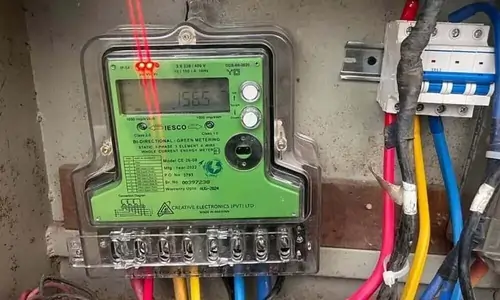
Grid Solar Installation's View: Is Net Metering Dead in Pakistan?
For new solar installations, the traditional net-metering model is effectively over.
This is not simply a marketing statement.
The NEPRA Distributed Generation and Net Metering Regulations 2015 were repealed in February 2026, and the new regulatory framework introduced net billing for new prosumer arrangements.
Therefore, when customers ask us:
“Should I install extra solar panels because net metering will adjust all my exported units?”
our answer in 2026 is:
Do not design your solar system around that assumption.
Grid Solar Installation's current technical and commercial view is that customers should avoid making a major solar investment dependent on generous future grid-export policies.
Several industry stakeholders, policy experts and lawmakers have also raised concerns about the move from net metering to net billing and its effect on rooftop-solar economics. Some experts have warned that weaker export incentives could encourage consumers toward greater self-consumption, battery storage and even reduced dependence on the grid.
However, no solar installer or industry expert can guarantee what Pakistan's future energy policy will be.
Regulations can change.
Therefore, our recommendation is simpler:
Build a solar system that makes financial and practical sense even if future grid-export incentives do not improve.
Our Recommendation for Solar Customers in 2026
Grid Solar Installation does not automatically recommend net billing simply because grid export is available.
Instead, we recommend first studying how much solar electricity you can use yourself.
Our preferred design priority is:
1. Consume Solar Directly
Use solar electricity inside your home, office, shop, factory or commercial facility while it is being generated.
2. Avoid Unnecessary Oversizing
Do not install excessive PV capacity only because you expect attractive compensation for exporting large quantities of electricity.
3. Shift Loads to Daytime Where Practical
Operate suitable energy-consuming equipment during solar-production hours.
4. Evaluate Battery Storage
Where the economics and backup requirement justify it, store surplus daytime solar energy for evening or nighttime consumption.
5. Treat Grid Export as Secondary
Where grid export is approved, it can still have value.
But we recommend treating export as an additional benefit rather than making it the foundation of the solar investment.
Why Our View Changed With the 2026 Solar Rules
Traditional net metering was attractive because imported and exported electricity could effectively be offset through the applicable net-metering mechanism.
That encouraged some customers to install solar capacity significantly above their immediate daytime consumption and rely heavily on exports.
The 2026 framework changes this calculation.
Under NEPRA's net-billing rules, electricity imported from the distribution company is billed at the applicable tariff, while electricity exported by the prosumer receives credit based on the National Average Energy Purchase Price.
This creates an important difference between:
1 solar unit consumed directly inside your property
and
1 solar unit exported to the grid and electricity purchased back later.
They should not automatically be treated as having the same financial value.
What Is Net Metering?
Traditional net metering allows a grid-connected solar consumer to send excess electricity to the utility network and receive credits that offset imported electricity according to the applicable net-metering arrangement.
Imagine:
During the day:
Solar Generation = 10 units
Your Home Uses = 4 units
Exported to Grid = 6 units
Later:
Grid Electricity Used = 6 units
Under a classic unit-based net-metering structure, exports and imports can be offset against each other according to the scheme's rules.
Pakistan used a net-metering regulatory framework introduced in 2015.
That regulatory structure was repealed in 2026.
What Is Net Billing?
Net billing is different.
Under Pakistan's 2026 Prosumer Regulations:
Grid Imports
Electricity supplied by the distribution licensee to the prosumer is billed according to the applicable tariff.
Solar Exports
Electricity supplied by the prosumer to the distribution licensee is credited according to the National Average Energy Purchase Price.
NEPRA explicitly defines this arrangement as net billing.
Net Metering vs Net Billing
Traditional Net Metering
The financial mechanism gave exported solar electricity a closer relationship with imported units under the applicable net-metering arrangement.
Current Net Billing
Import and export electricity are financially accounted for separately.
Grid Import
You purchase electricity according to the applicable consumer tariff.
Solar Export
The distribution company credits exported electricity according to the applicable energy-purchase mechanism.
Why This Matters
If your imported electricity costs significantly more than the credit received for exported electricity, using solar directly within your property can be more valuable than unnecessarily exporting it.
The Most Important Solar Term in 2026: Self-Consumption
Customers planning solar should understand self-consumption.
Self-consumption means:
Generating solar electricity and consuming that electricity directly within your own property.
Example:
Your solar system produces:
8 kW
Your property is currently consuming:
6 kW
The available solar electricity supplies those 6 kW directly.
Only the remaining production is available for charging batteries or exporting, depending on system configuration.
This is important because every solar unit you consume directly can reduce electricity you would otherwise need to purchase from the grid.
Our 2026 Solar Design Philosophy
Grid Solar Installation believes the solar industry needs to move away from one question:
“How many units can I export?”
and toward better questions:
How much electricity do I consume during daylight?
Which loads can I shift to daylight hours?
How much solar capacity can I actually utilise?
Do I need batteries?
How much electricity do I use after sunset?
How much backup do I need?
What happens financially if export compensation changes again?
These questions produce a more resilient solar investment.
Should You Avoid Net Metering / Net Billing Completely?
Not necessarily.
Grid export can still make sense in certain situations.
Our position is not:
Nobody should ever connect solar to the grid.
Our position is:
Do not oversize or financially justify your solar system solely because you expect grid exports to remain highly rewarding.
A properly sized on-grid solar system can still be valuable for customers with strong daytime electricity consumption.
For example:
A factory operating machinery throughout the day may consume most solar generation internally.
An office using substantial daytime air conditioning may consume solar directly.
A commercial facility operating during daylight can similarly achieve high self-consumption.
In those situations, grid export may only deal with occasional surplus generation.
That is very different from designing a residential system specifically to produce a large daytime surplus and depend on selling that electricity back.
What Do Industry Experts Say?
Pakistan's transition from net metering to net billing has generated substantial debate.
Industry representatives, policy specialists and lawmakers have expressed concerns about reduced incentives and regulatory uncertainty around rooftop solar.
Some experts have warned that weakening export economics could encourage consumers to:
A 2026 academic analysis of Pakistan's regulatory shift also concluded that the financial impact of net billing is highly dependent on the proportion of solar electricity consumed directly rather than exported, reinforcing the importance of self-consumption, battery storage and demand-side management.
This closely matches the direction Grid Solar Installation recommends to customers.
Could Net Metering Become Better Again in the Future?
Possibly.
Nobody can responsibly guarantee that it will—or that it will not.
Pakistan's electricity regulations, tariffs and solar policies can change.
There are already ongoing discussions within the wider energy sector about battery storage, time-of-use compensation and alternative methods of valuing distributed solar electricity.
For example, in July 2026 a Power Division consultant proposed time-of-use net-metering/net-billing incentives that could place greater value on electricity discharged during evening peak hours. This was a proposal, not a guarantee of future policy.
Therefore, Grid Solar Installation does not advise customers to invest today based on speculation about a future policy improvement.
We prefer:
Design for today's economics.
If future regulations become more favorable, treat that as an additional advantage.
What Solar System Do We Recommend Instead of Depending on Net Metering?
There is no single answer for every customer.
Option 1: Properly Sized On-Grid Solar
On-grid solar can still make excellent technical sense where a property has substantial daytime electricity consumption.
Example:
Solar → Your Loads
Grid → Remaining Load
Only genuine surplus → Grid
The objective is primarily reducing electricity purchased from the grid rather than operating the solar plant primarily as an exporter.
Suitable for:
Option 2: Hybrid Solar System
A hybrid system combines:
Solar + Battery + Grid
Instead of automatically exporting surplus solar energy, available energy can potentially charge batteries.
That stored electricity may later be used during:
-
Evening hours
-
Nighttime
-
Load shedding
-
Grid failures
Hybrid solar can therefore increase self-consumption and provide backup.
However, batteries have a cost.
We do not recommend adding batteries without first calculating whether they solve a real technical or financial requirement.
Option 3: Load Shifting
Sometimes the most economical solar improvement does not require another battery or additional panels.
It involves changing when electricity is consumed.
Where practical, daytime solar can be used for:
-
Water pumping
-
Air conditioning
-
Washing machines
-
Commercial equipment
-
Machinery
-
Water heating
-
EV charging
-
Production processes
-
Other flexible loads
This can increase direct solar consumption.
Option 4: Smart Export-Limited Design
Some customers may prefer a system designed primarily around their internal consumption rather than maximum possible export.
Depending on equipment, regulations and site conditions, solar generation and export behavior can be managed through appropriate system design.
The objective is to minimise economically weak surplus generation while still obtaining useful solar production.
Is Net Billing Bad for Everyone?
No.
The impact depends heavily on the customer's load profile.
Consider two properties.
Property A
Most electricity is consumed from 9 AM to 5 PM.
Solar generation occurs at the same time.
Most solar is consumed directly.
This property may still achieve strong solar utilisation even under net billing.
Property B
The property is almost empty throughout the day.
Most electricity is consumed after sunset.
Solar produces large amounts during the day and exports most of it.
This property depends much more heavily on the economics of grid export.
These customers should not necessarily receive the same solar-system design.
Existing Net-Metering Customers Are Different
Customers who entered valid arrangements under previous regulations should not automatically assume that the rules applicable to a new 2026 applicant are identical to their own arrangement.
There were regulatory changes and transitional measures during 2026 concerning existing agreements and applications made before the new framework took effect.
If you already have an existing net-metering agreement, check:
Do not change an existing solar configuration based only on general internet advice.
Your individual agreement should be reviewed.
Who Can Apply Under the Current Prosumer Framework?
The 2026 NEPRA framework covers eligible three-phase 400 V or 11 kV consumers in categories including:
-
Domestic
-
Commercial
-
Industrial
-
Agricultural
-
General services
-
Single-point bulk supply
The regulations define distributed-generation facilities under this framework as renewable generation up to 1 MW.
Eligibility still depends on the applicable technical and distribution-network requirements.
Solar Capacity Cannot Simply Be Oversized for Export
Under the current regulations, proposed distributed-generation capacity cannot exceed the premises' sanctioned load.
This reinforces an important point:
Solar capacity should be designed around the property.
Not simply around the desire to export maximum electricity.
Distribution Transformer Capacity Also Matters
The current regulations state that the licensee should not entertain an application where distributed-generation capacity connected to a particular distribution transformer has reached the specified regulatory threshold of its rated capacity.
Therefore, having enough roof space does not automatically guarantee that every proposed grid-export system can be interconnected.
Technical feasibility matters.
Larger Systems Require More Engineering
For proposed distributed-generation facilities of 250 kW or above, the regulations require a load-flow study through the licensee or a reputable consultant registered with the Pakistan Engineering Council.
This is particularly relevant to:
At this scale, grid interconnection should be treated as an electrical-engineering project rather than simply an application process.
Current Agreements Under the 2026 Framework
The Prosumer Regulations specify a five-year term for agreements entered into under the new framework, with provision for subsequent renewal by mutual consent under the applicable rules.
This is another reason customers should avoid calculating 15- or 20-year solar returns on the assumption that today's grid-export terms will necessarily remain unchanged for the entire lifetime of the solar panels.
A sensible feasibility analysis should test different future scenarios.
Do We Recommend Installing Extra Panels Just for Export?
Generally, not without a clear feasibility calculation.
Before adding additional PV capacity specifically for grid export, ask:
-
What is my daytime electricity consumption?
-
How many solar units will I consume myself?
-
How many will be exported?
-
What is the current export-credit mechanism?
-
What happens if that mechanism changes?
-
Would batteries or load shifting make better use of those units?
-
Is the additional investment justified without assuming favorable future policy?
If the financial case only works when assuming a generous future export rate, we consider that a higher-risk solar design.
What About Zero Electricity Bills?
Be careful with this claim.
Installing solar does not automatically mean:
“Your electricity bill will become zero forever.”
Bills can contain components that solar generation does not completely eliminate, and financial outcomes depend on:
-
Consumption
-
Tariffs
-
Fixed charges
-
Taxes
-
Peak/off-peak usage
-
Grid imports
-
Export credits
-
System generation
-
Seasonal variation
Grid Solar Installation prefers to estimate realistic electricity reduction rather than advertise guaranteed zero bills.
Net Metering vs Hybrid Solar in 2026
Export-Focused Grid Solar
Solar generates electricity.
You consume what you need.
Surplus electricity is exported.
You depend more heavily on the value of the export mechanism.
Hybrid Solar
Solar generates electricity.
You consume electricity directly.
Surplus can charge batteries.
Stored energy can be used later.
Grid electricity remains available when required.
Grid Solar Installation's Preference
Where the economics are appropriate, we increasingly recommend evaluating self-consumption and hybrid/storage strategies before designing a system primarily around grid exports.
This does not mean batteries are automatically right for everyone.
It means the decision deserves calculation.
Net Metering vs Off-Grid Solar
We also do not recommend moving completely off grid only because export compensation has weakened.
Going off-grid usually requires:
-
Larger battery capacity
-
Greater energy reserve
-
More careful load management
-
Potential generator backup
-
Greater system responsibility
If reliable grid electricity is available, keeping the grid as a backup source may still make considerable sense.
The goal should not be:
“Leave the grid at any cost.”
The goal should be:
“Use the grid only where it provides value.”
Grid Solar Installation's Solar Strategy for 2026 and Beyond
Our recommended hierarchy is:
First: Reduce Imported Electricity
Use solar directly during daylight.
Second: Increase Self-Consumption
Match the PV system to the property's load profile.
Third: Shift Flexible Loads
Move suitable consumption into solar-production hours.
Fourth: Evaluate Storage
Use batteries when backup or energy shifting justifies the investment.
Fifth: Export Genuine Surplus
Where grid export is approved, export electricity that cannot be economically used or stored.
This makes the solar investment less dependent on government policy.
Why Grid Solar Installation Takes This Position
Grid Solar Installation brings 10 years of solar installation experience and more than 25 years of electrical installation experience.
Our online presence is recent, but our practical work predates our digital launch.
Historically, much of our business developed through relationships and networking with:
Our experience has taught us that a successful solar system should solve the customer's actual electricity problem.
It should not depend entirely on a policy incentive.
That is why, in the 2026 market, we would rather tell a customer to install a correctly sized system than oversell additional capacity based on uncertain future export economics.
Our Position in One Sentence
Traditional net metering is effectively over for new solar prosumers in Pakistan in 2026, and Grid Solar Installation recommends designing new solar systems primarily for self-consumption rather than depending on future grid-export incentives.
We will continue monitoring regulatory developments.
If future policies improve the value of exported solar electricity, customers can benefit from that development.
But our system designs should make sense without needing that improvement to happen.
Request a Solar System Assessment
Before deciding whether net billing, on-grid solar, hybrid solar or battery storage is right for your property, we recommend analysing:
Grid Solar Installation can then help determine what type of solar architecture makes the most sense for your energy requirements.