Three-Phase Solar System in Pakistan
Grid Solar Installation brings 10 years of solar installation experience and more than 25 years of electrical installation experience.
Our digital presence is recent, but our practical experience developed through years of work and professional relationships with builders, businesses and construction companies.
What Is a Three-Phase Solar System?
A three-phase solar system uses a compatible solar inverter or inverter architecture to supply solar-generated AC electricity into a three-phase electrical system.
A typical configuration may look like:
Solar Panels → Three-Phase Inverter → Three-Phase Distribution System → Property Loads
For a hybrid system:
Solar + Battery + Grid → Three-Phase Hybrid Inverter/System → Property Loads
The solar panels themselves generate DC electricity.
It is the inverter and electrical architecture that determine how that solar electricity is converted and integrated into the property's three-phase AC supply.
What Is Three-Phase Electricity?
A three-phase electrical supply uses three alternating-current conductors or phases, commonly identified as:
In a typical low-voltage three-phase system, approximately 400 V exists between phases, while individual phase-to-neutral loads operate at approximately 230 V, depending on supply conditions.
This configuration allows electrical demand to be distributed across multiple phases and is widely used where larger electrical loads are present.
Pakistan's current NEPRA Prosumer Regulations 2026 specifically define an eligible applicant under the prosumer framework as a 3-phase 400 V or 11 kV domestic, commercial, industrial, agricultural, general-services or single-point bulk-supply consumer.
This makes three-phase electrical infrastructure particularly relevant to grid-connected solar projects.
Who Needs a Three-Phase Solar System?
A three-phase solar system may be appropriate when the property already has a three-phase electricity connection or operates equipment that requires three-phase power.
Common applications include:
Large Homes
Large homes may have three-phase connections because of substantial electrical demand from:
A residential property with a three-phase meter should generally be assessed as a three-phase electrical system rather than treated like a small single-phase installation.
Offices and Corporate Buildings
Offices can use three-phase electricity for:
Solar can be designed to contribute to these daytime loads across the building's electrical infrastructure.
Shops, Plazas and Retail Buildings
Commercial properties may have substantial electricity consumption during daytime solar-production hours.
A three-phase system can be particularly relevant for:
-
Supermarkets
-
Department stores
-
Commercial plazas
-
Showrooms
-
Large retail outlets
-
Restaurants
-
Shopping facilities
The electrical load should still be analysed phase by phase.
Warehouses and Logistics Facilities
Warehouses may operate:
-
Lighting
-
Ventilation
-
Refrigeration
-
Compressors
-
Conveyors
-
Pumps
-
Offices
-
Security equipment
-
Charging equipment
Many larger facilities use three-phase distribution because of these commercial loads.
Factories and Industrial Facilities
Three-phase electricity is standard for many industrial applications because equipment such as motors and machinery frequently operates on three-phase power.
Typical loads can include:
-
Motors
-
Pumps
-
Compressors
-
Chillers
-
CNC machinery
-
Production equipment
-
Conveyors
-
Industrial HVAC
-
Refrigeration
-
Processing equipment
Three-phase industrial solar requires more detailed electrical engineering than a normal residential installation.
Schools, Hospitals and Institutional Buildings
Larger institutional properties can also have three-phase electricity because of their extensive building loads.
The solar system should be designed around:
-
Operating hours
-
Critical loads
-
Peak demand
-
Existing generators
-
Existing UPS systems
-
Electrical distribution
-
Backup requirements
Agricultural and Farm Applications
Three-phase solar may also be relevant where agricultural properties operate:
-
Water pumps
-
Tube wells
-
Motors
-
Irrigation systems
-
Cold storage
-
Processing machinery
-
Other agricultural loads
Motor characteristics and starting requirements should be assessed carefully.
Single-Phase vs Three-Phase Solar System
The main difference is not the solar panel.
The difference is the AC electrical system and inverter architecture.
Single-Phase Solar
A single-phase system supplies or interfaces with a single AC phase.
It may be appropriate for smaller properties with relatively modest electrical demand.
Three-Phase Solar
A three-phase system integrates solar generation with a three-phase electrical installation.
It is commonly used where:
-
The property has a three-phase connection
-
Loads are distributed across three phases
-
Larger inverter capacity is required
-
Three-phase machinery is installed
-
Commercial or industrial loads are present
Neither is universally “better.”
The correct system depends on the property's electrical connection and load.
Do You Need a Three-Phase Solar Inverter?
If the property has a three-phase supply, inverter architecture should be selected according to the actual system design and applicable interconnection requirements.
A dedicated three-phase inverter can convert solar DC power into AC power suitable for a three-phase electrical system.
Depending on the project, possible architectures may include:
-
One three-phase on-grid inverter
-
One three-phase hybrid inverter
-
Multiple coordinated inverters
-
Larger commercial string-inverter architecture
-
Other engineered configurations
The correct design depends on:
-
Solar capacity
-
Grid connection
-
Load profile
-
Backup requirements
-
Battery requirements
-
Phase loading
-
Project scale
-
Equipment capabilities
Grid Solar Installation does not recommend selecting inverter architecture solely from advertised kW capacity.
Phase Balancing Matters
One of the most important technical issues in a three-phase electrical system is load distribution.
Imagine a property where:
Phase L1 = 8 kW
Phase L2 = 3 kW
Phase L3 = 2 kW
Although the total load is 13 kW, the phases are not equally loaded.
This can affect:
-
Electrical-system performance
-
Cable and breaker loading
-
Solar utilisation
-
Backup design
-
Inverter selection
-
Generator integration
-
Neutral current in relevant configurations
A three-phase solar survey should therefore not simply ask:
“What is your total load?”
It should also ask:
“How is that load distributed across the electrical system?”
Does a Three-Phase Solar Inverter Automatically Balance Every Load?
No.
This is an important point.
Different three-phase inverters and hybrid systems have different capabilities regarding:
Customers should not assume that a 15 kW three-phase inverter means any individual phase can independently supply 15 kW.
The manufacturer's technical limits and system design must be checked.
This is especially important in hybrid and backup installations.
Three-Phase On-Grid Solar System
A three-phase on-grid solar system operates in parallel with the utility grid.
During the day:
Solar → Property Load
When the property's demand exceeds solar generation:
Solar + Grid → Property Load
Where grid export has been approved:
Eligible Surplus Solar → Grid
This configuration can be particularly useful for:
The main objective is usually to reduce electricity purchased from the grid during solar-production hours.
Three-Phase Hybrid Solar System
A three-phase hybrid solar system combines:
Solar + Battery + Grid
This configuration can provide additional capabilities such as:
However, designing three-phase battery backup can be more complex than simply installing a battery.
Important considerations include:
The battery and inverter need to work as one coordinated system.
Three-Phase Off-Grid Solar System
A three-phase off-grid system can also be designed for properties that need three-phase power without relying on the utility grid.
This may be relevant for:
Because the grid is not available as automatic backup, the project requires careful consideration of:
True three-phase off-grid systems should be engineered from detailed load data.
Three-Phase Solar During Load Shedding
Whether solar continues working during a grid failure depends on the system architecture.
Conventional On-Grid System
A normal grid-tied solar inverter generally disconnects when the utility grid fails.
This is part of grid-safety and anti-islanding requirements.
Even if the sun is shining, a conventional on-grid system should not be assumed to power the property during an outage.
Hybrid Three-Phase System
A compatible hybrid system may provide backup to designated loads if:
-
Battery storage is available
-
Backup output is properly designed
-
The electrical system is configured correctly
-
The load remains within inverter limits
The installer should establish exactly:
Which phases are backed up?
Which circuits remain operational?
What maximum power can each phase support?
How long can the battery support the selected loads?
Do not accept a vague statement such as:
“It is a hybrid inverter, so everything will work.”
Three-Phase Solar for Air Conditioners
A three-phase property may contain multiple single-phase air conditioners distributed across different phases.
Larger buildings may also operate dedicated three-phase HVAC equipment.
Solar can contribute to these loads, but correct design requires understanding:
Running air conditioners from daytime solar is very different from expecting batteries to operate them during load shedding.
For battery-backed AC operation, storage requirements can become substantial.
Three-Phase Solar for Motors and Pumps
Motor-driven equipment requires additional attention because starting demand can be significantly different from normal running load.
Examples include:
-
Water pumps
-
Compressors
-
Chillers
-
Industrial motors
-
Elevators
-
Refrigeration equipment
Relevant information may include:
A system should not be sized solely by adding the running wattage of motors.
Solar System Sizing for a Three-Phase Connection
Three-phase solar sizing should start with actual electrical information.
Electricity Bills
Several months of bills help establish seasonal energy consumption.
Daytime Consumption
Solar produces electricity primarily during daylight.
Understanding daytime consumption helps determine potential direct self-consumption.
Maximum Demand
Larger commercial and industrial customers may have substantial instantaneous demand.
Phase-by-Phase Load
Loads should be reviewed across L1, L2 and L3 where appropriate.
Sanctioned Load
Sanctioned load is particularly important where grid-connected export approval is intended.
Operating Hours
A business operating from 9 AM to 5 PM has a different solar profile from a facility operating 24 hours.
Future Expansion
Additional equipment, floors, machinery, EV chargers or production lines should be considered before finalising the architecture.
kW and kWh in a Three-Phase Solar System
Customers often confuse these terms.
kW – Power
Kilowatts describe instantaneous power.
For example:
A building may be consuming 20 kW at one moment.
kWh – Energy
Kilowatt-hours describe energy consumed over time.
For example:
A 10 kW load operating for five hours consumes approximately 50 kWh before accounting for changing load conditions.
A good solar design needs to understand both.
Inverter capacity is strongly related to power.
Solar generation and battery autonomy also require analysis of energy.
Three-Phase Solar and Sanctioned Load in Pakistan
For customers who want grid-connected export under Pakistan's prosumer framework, sanctioned load matters.
NEPRA's Prosumer Regulations 2026 define eligible applicants as 3-phase 400 V or 11 kV consumers and limit qualifying distributed-generation facilities under the framework to renewable generation of up to 1 MW.
The proposed distributed-generation capacity under the applicable framework is also subject to sanctioned-load and interconnection requirements.
This means having enough roof space for a large system does not automatically mean the same capacity should be connected to the grid.
System design must consider both:
electrical demand and regulatory feasibility.
Three-Phase Solar and Pakistan's 2026 Net-Billing Rules
Customers should also understand that Pakistan's solar-export framework changed in 2026.
The NEPRA Prosumer Regulations 2026, notified on February 9, replaced the previous net-metering regulatory framework for new qualifying prosumer arrangements. NEPRA's legal register also shows subsequent amendments during 2026.
For new projects, Grid Solar Installation therefore recommends that solar design focus primarily on:
Direct Self-Consumption
Use solar electricity inside your own property whenever possible.
Correct System Sizing
Avoid installing unnecessary capacity only to maximise exports.
Load Management
Where practical, operate flexible loads during solar-production hours.
Battery Storage Where Appropriate
Evaluate storage where backup or energy shifting justifies it.
Grid Export as Secondary
Grid export can still have value where approved, but we do not recommend making future export compensation the foundation of the project economics.
Our Position on Net Metering in 2026
Grid Solar Installation's experience-based view is that traditional net metering is effectively over for new applicants under the 2026 framework.
We therefore do not recommend oversizing a three-phase solar system simply because a customer expects to export large amounts of electricity.
Instead, we ask:
-
How much electricity do you consume during daylight?
-
How much can solar replace directly?
-
How much genuine surplus will remain?
-
Can flexible loads be moved into solar hours?
-
Is battery storage technically and financially useful?
Our goal is to design a solar system that makes sense based on the customer's own electricity use.
If future grid-export policy becomes more favorable, that can be an additional benefit—not an assumption required to justify today's investment.
Three-Phase Solar Approval for Systems Up to 25 kW
There was an important regulatory change on August 6, 2026.
NEPRA's amendment to the Prosumer Regulations removed the requirement for NEPRA concurrence for distributed-generation facilities of 25 kW or below; the concerned distribution licensee handles the applicable approval.
This does not mean that technical and interconnection requirements disappear.
The customer's:
still need to satisfy the applicable requirements.
Three-Phase Solar Above 25 kW
Larger systems require a different level of regulatory attention.
For projects above the threshold where NEPRA concurrence applies, the project should follow the current approval pathway and applicable fee structure.
Commercial and industrial projects should therefore establish regulatory requirements before finalising equipment procurement.
Systems of 250 kW and Above
For larger qualifying distributed-generation projects, additional engineering requirements become important.
Under the current prosumer framework, proposed systems of 250 kW or above require a load-flow study through the applicable process.
This is particularly relevant for:
At this size, solar should be treated as a substantial electrical-generation project rather than simply an inverter installation.
Three-Phase Solar System Components
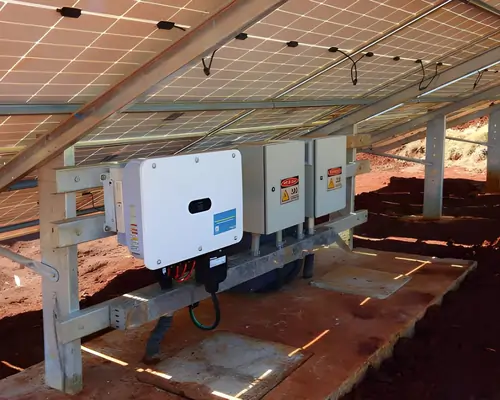
A professional system may include:
Solar Panels
Convert sunlight into DC electricity.
Three-Phase Solar Inverter
Converts solar DC electricity into AC power compatible with the system architecture.
Battery Storage
Included in hybrid or off-grid configurations when energy storage or backup is required.
Solar Mounting Structure
Supports the modules securely according to the site conditions.
AC Distribution Equipment
Connects and protects the inverter output within the electrical system.
DC Protection
Protects and isolates the solar-array circuits according to system requirements.
AC Protection
Provides appropriate protection on the AC side.
Earthing
Proper earthing is an essential part of electrical-system safety.
Surge Protection
Appropriate surge-protection measures may be incorporated according to project design.
Monitoring
Compatible equipment may provide data relating to:
-
Solar generation
-
Grid import
-
Grid export
-
Battery status
-
Load
-
Inverter operation
-
Historical performance
Three-Phase Solar Requires Proper Electrical Integration
Solar panels are only one part of the project.
A three-phase solar installation may need to integrate with:
This is why Grid Solar Installation's 25+ years of electrical installation experience is particularly relevant to three-phase solar work.
The solar installation should work with the building's electrical infrastructure—not fight against it.
Generator Integration With Three-Phase Solar
Many commercial and industrial properties already have three-phase generators.
If solar is added, the operating relationship between solar and generator power must be considered carefully.
Depending on the project, relevant factors may include:
Generator integration should be considered during system design rather than after installation.
UPS Integration With Three-Phase Solar
Some offices, hospitals, IT facilities and commercial buildings already use large UPS systems.
Before adding hybrid solar, we assess:
It may make sense to keep certain existing UPS systems, particularly where sensitive equipment requires specific continuity characteristics.
Solar battery storage and UPS functionality should not automatically be treated as identical.
Phase-by-Phase Backup Design
For three-phase hybrid solar, one of the most important design questions is:
What needs to remain operational on each phase during a blackout?
For example:
Phase L1
-
Server
-
Internet
-
CCTV
-
Lighting
Phase L2
-
Refrigerator
-
Selected air conditioner
-
Pumps
Phase L3
-
Office equipment
-
Lighting
-
Security
The actual design could be completely different.
The point is that backup should be planned.
A property may need:
These configurations can require significantly different inverter and battery capacities.
How Much Battery Does a Three-Phase Hybrid System Need?
There is no universal battery size for a 10 kW, 15 kW or 20 kW three-phase inverter.
Battery sizing depends on:
Consider two properties with identical 15 kW hybrid inverters.
One needs:
2 kW essential load for four hours.
The other needs:
12 kW load for four hours.
They require completely different storage capacity.
This is why battery quantity should never be selected from inverter size alone.
Three-Phase Solar System Price in Pakistan
There is no single responsible price for a three-phase solar system.
Cost depends on factors including:
-
Solar-panel capacity
-
Inverter type
-
On-grid or hybrid architecture
-
Battery storage
-
Three-phase inverter capacity
-
Roof or ground structure
-
Electrical protection
-
Cable distances
-
Existing electrical infrastructure
-
Generator or UPS integration
-
Grid-interconnection requirements
-
Site complexity
A quotation advertised simply as:
“15 kW Three-Phase Solar Package”
does not tell you enough.
Two 15 kW proposals can differ substantially in:
-
Panel capacity
-
Inverter capability
-
Battery storage
-
Protection
-
Structure
-
Wiring
-
Backup capability
-
Installation scope
Grid Solar Installation recommends a load-based and site-specific quotation.
Questions to Ask Before Buying a Three-Phase Solar System
Is my existing electricity connection actually three-phase?
Confirm the electrical supply before selecting equipment.
How is my load distributed across the three phases?
Phase loading can materially affect system design.
What is the inverter's maximum output per phase?
Do not assume the total inverter rating is available independently on each phase.
Can the inverter handle unbalanced loads?
Check the actual manufacturer's specifications for the selected equipment.
Which loads work during a grid outage?
Get a clear answer before installing a hybrid system.
What battery capacity is included?
Ask for usable kWh as well as nominal capacity.
Can the battery deliver the required power?
Battery energy and battery power are different specifications.
What electrical protection is included?
The proposal should clearly identify the relevant AC, DC, earthing and protection scope.
How is my generator or UPS integrated?
Existing power systems need to be considered.
What assumptions are being used for solar savings?
Financial projections should reflect actual consumption and current grid-export rules.
Three-Phase Solar System Installation Process
Step 1 – Requirement Discussion
We identify whether the main objective is:
Step 2 – Electricity Review
Available electricity bills and connection information are reviewed.
Step 3 – Three-Phase Load Assessment
We assess:
-
Total load
-
Phase-by-phase load
-
Major equipment
-
Peak demand
-
Motor loads
-
Operating hours
Step 4 – Site Survey
We assess:
-
Roof or ground area
-
Electrical panels
-
Meter
-
Cable routes
-
Inverter location
-
Battery location
-
Existing generator
-
Existing UPS
-
Earthing
-
Installation constraints
Step 5 – System Design
We determine appropriate:
Step 6 – Proposal
The customer should receive a clear technical and commercial scope.
Step 7 – Installation
Solar and associated electrical equipment are installed according to the agreed design.
Step 8 – Testing
The installation is tested before final handover.
For hybrid systems, backup behaviour should also be verified.
Step 9 – Handover
The customer should understand:
Common Three-Phase Solar Mistakes
Choosing Inverter Capacity Without Checking Phase Loads
Total load alone may hide significant imbalance.
Assuming a Three-Phase Hybrid Inverter Backs Up Everything
Backup capability depends on equipment and wiring.
Ignoring Motor Starting Loads
Motors and compressors can create large transient demand.
Selecting Battery Capacity From Inverter Size
Battery storage should be based on energy requirements.
Oversizing for Grid Export
Grid-export economics should not be the only reason for installing additional solar capacity.
Ignoring Existing Generator and UPS Systems
These systems need to be considered during design.
Comparing Solar Quotations Only by kW
A system's electrical engineering and installation scope matter as much as the headline capacity.
Why Grid Solar Installation?
A three-phase solar system is ultimately an electrical integration project.
That makes experience with electrical systems especially important.
Grid Solar Installation brings 10 years of solar installation experience and more than 25 years of electrical installation experience.
Before our recent digital expansion, much of our business developed through professional networks involving:
-
Builders
-
Businesses
-
Construction companies
Our digital footprint is new.
Our practical experience is not.
Our objective is not to sell the largest inverter possible.
We first want to understand:
Your Load + Your Three-Phase Distribution + Your Solar Objective + Your Backup Requirement
and then design the system around those requirements.
Grid Solar Installation's Three-Phase Solar Philosophy
For new systems in Pakistan, our approach is:
Design Around Actual Load
Not an arbitrary solar package.
Understand All Three Phases
Do not evaluate only total consumption.
Prioritise Self-Consumption
Use generated solar energy inside the property wherever practical.
Avoid Export-Dependent Oversizing
Do not make the entire investment depend on future grid-export incentives.
Engineer Backup Separately
Define exactly which loads need electricity during an outage.
Size Battery From kWh and kW Requirements
Not simply inverter capacity.
Integrate With Existing Electrical Infrastructure
Generators, UPS systems, motors and distribution boards should be considered from the start.
Request a Three-Phase Solar Assessment
If your home, office, shop, warehouse, factory or other property has a three-phase electricity connection, prepare the following information where available:
-
Property type
-
Location
-
Recent electricity bills
-
Sanctioned load
-
Three-phase connection details
-
Maximum demand if available
-
Major electrical equipment
-
Number of air conditioners
-
Motors and pumps
-
Generator capacity
-
Existing UPS
-
Required backup loads
-
Desired backup duration
-
Available roof or ground area
-
Existing solar equipment
-
Future electrical expansion
Grid Solar Installation can then assess whether an On-Grid Three-Phase Solar System, Hybrid Three-Phase Solar System, or another configuration is more appropriate.