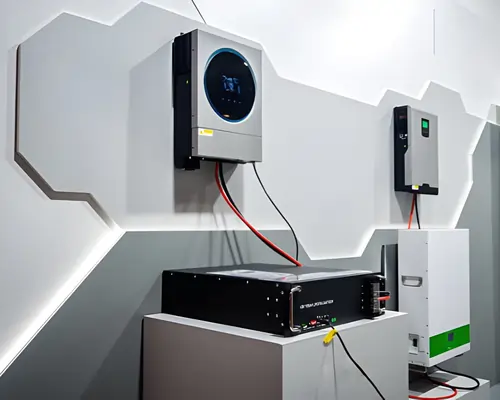
What Is an Off-Grid Solar System?
An off-grid solar system, sometimes called a standalone solar power system, operates independently from the utility electricity network.
During daylight hours, solar panels generate electricity. Part of that electricity can supply appliances directly while available surplus charges the battery bank. When solar production falls in the evening, at night or during poor weather, stored battery energy supplies the connected loads.
A properly designed system may include:
-
Solar panels
-
Off-grid or battery-compatible inverter
-
Battery storage
-
Solar charge control or integrated MPPT system
-
Mounting structure
-
DC and AC cabling
-
Electrical protection
-
Earthing and isolation
-
Monitoring equipment
-
Optional backup generator integration where required
Unlike an on-grid solar system, a true off-grid system does not depend on net metering, net billing or grid export for normal operation.
Who Should Consider an Off-Grid Solar System?
Off-grid solar makes the most sense where independence from the electricity grid solves a genuine operational problem.
It can be suitable for:
Remote Homes and Properties
Properties located where a utility electricity connection is unavailable, difficult to obtain or expensive to extend may benefit from a standalone solar system.
Farmhouses and Agricultural Sites
Farmhouses, agricultural facilities, livestock locations and other rural properties may require independent electricity for lighting, security, refrigeration, communication or other equipment.
Remote Offices and Work Sites
Construction sites, field offices, telecom-related locations and other remote operations may require electricity where a conventional grid connection is impractical.
Locations with an Unreliable Grid
Where grid electricity is extremely unreliable, a properly engineered independent power system may provide greater control over energy availability.
Special or Critical Loads
Some customers require selected equipment to operate independently of the public grid.
However, off-grid is not automatically the best solar system for every customer.
If reliable grid electricity is already available and your main objective is electricity-bill reduction plus backup during outages, a Hybrid Solar System may be more practical.
How an Off-Grid Solar System Works
An off-grid system has to balance three things continuously:
solar generation, electricity consumption and stored battery energy.
During strong sunlight:
Solar Panels → Inverter / Controller → Property Loads
At the same time, additional available solar energy can charge the batteries.
When solar generation is lower than the property's demand:
Solar Panels + Battery → Property Loads
At night:
Battery Storage → Inverter → Property Loads
Because there is no utility grid automatically supplying additional electricity, the system must be designed around realistic consumption and expected operating conditions.
That is why simply asking for a “5 kW” or “10 kW off-grid system” is not enough to design one correctly.
Off-Grid Solar System Sizing Starts With Your Load
Two properties can both require a 5 kW inverter while needing completely different battery and solar-panel capacities.
The correct design starts with a detailed load assessment.
We need to understand:
-
Which appliances will operate
-
Appliance wattage
-
Daily operating hours
-
Daytime versus nighttime usage
-
Maximum simultaneous load
-
Motor and compressor starting loads
-
Seasonal electricity requirements
-
Required backup duration
-
Future planned electrical loads
The daily electricity requirement is normally considered in kilowatt-hours (kWh), while inverter sizing also needs to consider the maximum instantaneous kilowatt (kW) demand.
These are not the same measurement.
A property may have moderate daily energy consumption but still require a larger inverter because several high-power appliances operate simultaneously.
Battery Storage Is the Heart of an Off-Grid System
Battery capacity is one of the most important design decisions in an off-grid installation.
The battery must supply energy when solar generation cannot meet the load, including:
-
Nighttime
-
Cloudy conditions
-
Early mornings and evenings
-
Periods of unusually high consumption
-
Reduced solar-production periods
Battery sizing should therefore consider more than inverter capacity.
Important factors include:
Daily Energy Consumption
How many kWh the property actually consumes.
Required Autonomy
How long the system should operate when solar generation is insufficient.
Usable Battery Capacity
The full advertised battery capacity is not always the same as the energy available for normal use.
Battery Technology
Different battery chemistries have different operating characteristics, charging requirements and usable capacity.
Charge and Discharge Limits
The battery must be capable of supplying the power required by connected loads.
Future Expansion
If consumption is expected to increase, the system architecture should consider that from the beginning.
We do not recommend selecting a battery simply because it is commonly paired with a particular inverter size.
The battery should be selected according to the actual load and required backup duration.
Why Days or Hours of Autonomy Matter
One of the most useful measurements for an off-grid customer is autonomy.
Autonomy means approximately how long the battery system can support the designed load when sufficient solar generation is unavailable.
For example, a customer who only needs essential nighttime loads has a very different storage requirement from a property that expects air conditioning, pumps, refrigeration and other equipment to operate throughout the night.
A customer requiring electricity through extended periods of poor solar generation may need:
There is no responsible universal “one battery fits every 5 kW system” rule.
Solar Panel Capacity for an Off-Grid System
Off-grid solar panels have two jobs:
-
Supply daytime electricity consumption.
-
Produce enough additional energy to recharge battery storage.
This is why panel capacity cannot be selected only from inverter capacity.
A system may require additional PV capacity because of:
An off-grid system must have enough energy generation to recover battery charge while continuing to serve the property's operating load.
Inverter Sizing and Starting Loads
The inverter must safely support the maximum electrical power required at one time.
Appliances containing motors or compressors can have starting demands significantly higher than their normal running consumption.
Examples can include:
-
Air conditioners
-
Refrigerators
-
Freezers
-
Water pumps
-
Motors
-
Compressors
-
Certain machinery
This means inverter selection should consider both:
continuous operating load and starting/surge load.
Choosing an inverter only by adding appliance nameplate wattages without understanding how the equipment starts and operates can result in shutdowns or poor system performance.
Off-Grid Solar for Air Conditioners and Heavy Loads
Yes, an off-grid solar system can be designed for air conditioners and other substantial loads, but the required system can become much larger than customers initially expect.
Running heavy loads for several nighttime hours increases battery-storage requirements considerably.
Before designing such a system, we assess:
-
Number and capacity of air conditioners
-
Expected operating hours
-
Daytime versus nighttime use
-
Other simultaneous appliances
-
Battery autonomy target
-
Inverter surge requirements
-
Available solar-panel area
The right question is not simply:
“Can solar run my AC?”
The better question is:
“For how many hours, alongside which other loads, and under what solar conditions?”
That information allows a realistic system to be designed.
Off-Grid Solar System Components
Solar Panels
Solar modules convert sunlight into DC electricity. Their total capacity should be designed around energy consumption and battery charging requirements.
Off-Grid Inverter
The inverter converts available DC electricity into usable AC electricity for household or business loads and manages the power system according to its configuration.
Battery Bank
Batteries store electricity for periods when solar production is insufficient.
MPPT / Charge Management
Modern systems may incorporate MPPT charge control within the inverter or through separate equipment. Correct configuration protects battery charging and improves solar-energy utilisation.
Mounting Structure
The solar array requires a secure structure appropriate for the installation location and property conditions.
AC and DC Protection
A professional installation should consider suitable isolation, circuit protection and safe system integration.
Earthing
Proper earthing is an important part of electrical safety and equipment protection.
Monitoring
Monitoring can help customers observe production, battery state, consumption and system conditions depending on the selected equipment.
Electrical Safety Matters Even More Off Grid
Solar installation is not only panel mounting.
An off-grid system combines substantial DC generation, battery storage, inverters and building electrical loads.
System design should therefore consider:
-
Correct cable sizing
-
Appropriate DC protection
-
Appropriate AC protection
-
Isolation
-
Earthing
-
Battery protection
-
Equipment ventilation
-
Safe inverter positioning
-
Secure connections
-
Correct system configuration
-
Proper commissioning and testing
Grid Solar Installation's 25+ years of electrical installation experience supports the electrical side of our solar work, not just the rooftop installation.
Our Off-Grid Solar Installation Process
1. Requirement Discussion
We first identify why the customer is considering off-grid solar and which loads must operate.
2. Load Assessment
We calculate expected daily consumption, simultaneous load, nighttime consumption and important surge loads.
3. Site Assessment
The property is evaluated for usable solar area, shading, equipment placement, electrical condition, cable routes and installation constraints.
4. System Design
Solar-panel capacity, inverter capacity and battery storage are selected around the agreed operating requirements.
5. Written Proposal
The customer should receive a clear project scope identifying the proposed system and major equipment.
6. Installation
Solar modules, mounting, inverter, batteries and electrical equipment are installed according to the agreed design.
7. Testing and Commissioning
The completed system is tested before handover.
8. Customer Handover
The customer should understand system operation, monitoring, battery use and important operating limitations.
Off-Grid Solar System Price in Pakistan
There is no responsible single price for an off-grid solar system in Pakistan because battery storage can significantly change project cost.
Two systems advertised as “5 kW off-grid solar systems” can have very different prices depending on their battery capacity and technical scope.
The main cost factors include:
For this reason, Grid Solar Installation recommends obtaining a load-based quotation rather than selecting a system solely from an advertised kW package.
A quote should clearly state what is included so different proposals can be compared fairly.
Off-Grid vs Hybrid Solar System
Customers often confuse off-grid and hybrid solar.
Off-Grid Solar
-
Designed to operate independently from the utility grid
-
Requires energy storage for electricity outside solar-production periods
-
Particularly relevant where grid access is unavailable or unsuitable
-
Does not rely on grid export or net billing
-
System sizing must account for independent energy supply
Hybrid Solar
-
Usually remains connected to the electricity grid
-
Can incorporate battery backup
-
Can use solar, battery and grid electricity according to system configuration
-
Often more practical where an existing usable grid connection is available
-
Provides an additional energy source when stored solar energy becomes insufficient
If you already have a dependable grid connection, we recommend comparing both options before deciding to disconnect from or avoid the grid.
Off-Grid vs On-Grid Solar System
An on-grid solar system normally focuses on reducing electricity purchased from the utility while remaining grid-connected.
A true off-grid solar system must provide its own electricity without relying on the utility.
Because the grid is not available as backup, battery storage and load management become much more important in an off-grid design.
Customers whose main objective is electricity-bill reduction rather than energy independence should also compare an On-Grid Solar System before making a final decision.
Maintenance of an Off-Grid Solar System
Off-grid systems require ongoing attention because battery condition directly affects energy availability.
Maintenance requirements may include:
-
Keeping solar panels reasonably clean
-
Monitoring battery state of charge
-
Checking system warnings or fault logs
-
Inspecting connections
-
Checking protective equipment
-
Reviewing unusual changes in energy consumption
-
Ensuring inverter and battery areas remain suitable for the equipment
-
Periodic professional electrical inspection
Customers should also understand that adding new high-load appliances after installation can change the performance of a previously well-sized system.
Contact us before making major additions to the designed load.
Common Off-Grid Solar Design Mistakes
Choosing System Size From the Monthly Electricity Bill Alone
Bills can provide useful information, but off-grid design requires daily and hourly load understanding.
Undersizing Battery Storage
A large inverter does not compensate for inadequate battery capacity.
Ignoring Starting Current
Motors and compressors can require substantially more power during startup.
Designing for Perfect Sunny Weather
An independent system should consider realistic operating conditions, not just ideal solar production.
Adding Heavy Loads After Installation
An off-grid system designed for one load profile may no longer be adequate after major appliances are added.
Buying Equipment Before Designing the System
The inverter, battery and solar array should work as one coordinated system.
Why Choose Grid Solar Installation?
Our online presence is recent. Our practical installation experience is not.
Grid Solar Installation brings 10 years of solar installation experience and more than 25 years of electrical installation experience.
Before launching our consumer-facing digital presence, much of our work developed through professional relationships with builders, businesses, contractors and the construction sector.
We are now bringing that same practical approach online.
Our goal is not to recommend the largest possible solar package.
It is to understand the property, electrical load and customer's objective before determining whether off-grid, hybrid or on-grid solar is the appropriate solution.
As our digital portfolio grows, we intend to support this experience with documented installations, real project information and genuine customer feedback.
Request an Off-Grid Solar Assessment
If you are considering independent solar power for a home, farmhouse, business, agricultural property or remote site, start with your actual electrical requirements.
When contacting Grid Solar Installation, it helps to provide:
-
Your location
-
Property type
-
Whether utility electricity is available
-
Appliances you want to operate
-
Required nighttime loads
-
Air conditioners, pumps or motors
-
Desired backup duration
-
Available roof or ground area if known
-
Existing solar equipment, if any
We can then determine whether an Off-Grid Solar System, Hybrid Solar System or another configuration is more suitable for your requirements.